
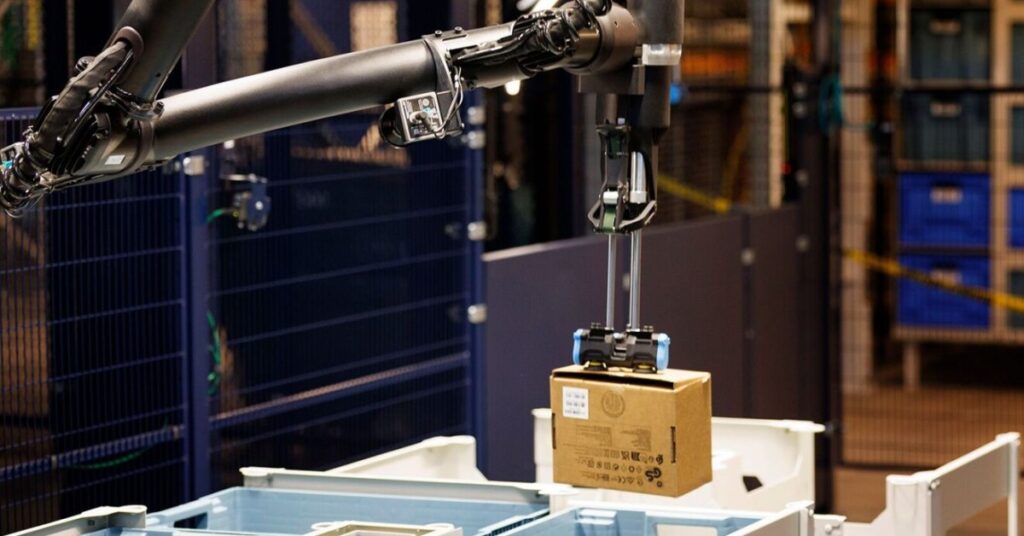
Amazon has unveiled two significant developments in its operations: Blue Jay, a robot designed to assist employees with physical tasks, and Project Eluna, an AI system aimed at reducing cognitive demands on workers while streamlining sorting processes. The company describes Blue Jay as capable of handling 75 percent of its inventory and states that it aims to make this technology central to its Same-Day delivery services.
Developed in just over a year, Blue Jay integrates AI, digital twins, and pre-existing robot data to manage multiple robotic arms, consolidating what used to be three separate stations into one efficient workspace for picking, stowing, and consolidating items. Tye Brady, Amazon’s Robotics chief technologist, emphasizes that the focus should not only be on the robots but also on the evolving landscape of human labor. In support of this, a spokesperson noted that Amazon has created more jobs in the U.S. than any other company over the past decade and plans to hire 250,000 workers for the upcoming holiday season.
In June, CEO Andy Jassy addressed employees about the implications of efficiency improvements from generative AI. He stated that this technology would lead to a shift in job types, indicating a potential reduction in total corporate workforce numbers as AI becomes more integrated into operations.
The recent report from the Times implies that Amazon’s automation strategies echo this sentiment, showcasing efforts to lower e-commerce costs and redesign warehouses to function with fewer employees, who are increasingly tasked with overseeing robotic systems. This raises questions about the long-term impact on employment within the company.
Source: https://www.theverge.com/news/805098/amazon-robots-ai-warehouses