
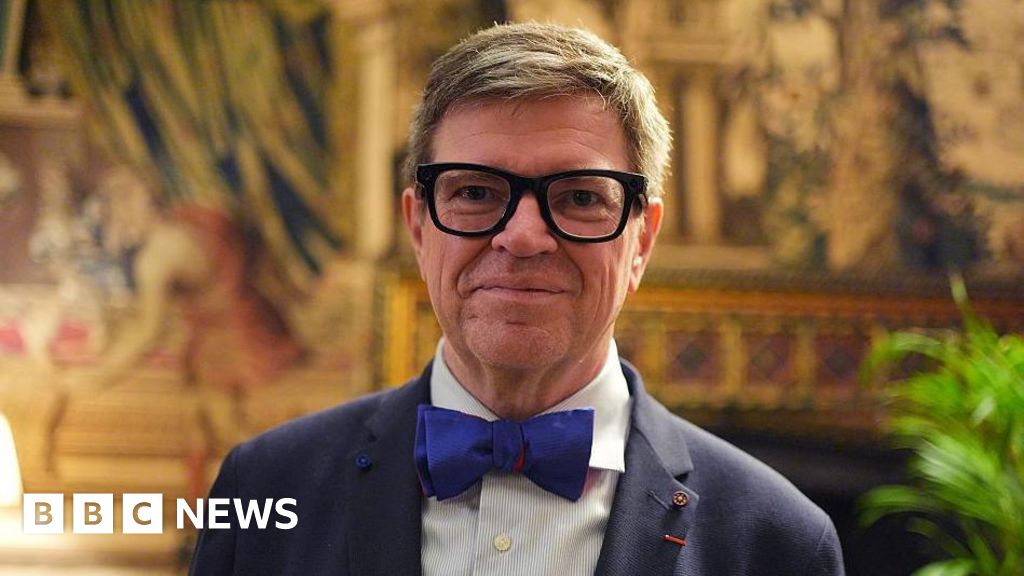
Professor Yann LeCun, a notable figure in artificial intelligence (AI), recently received an award from King Charles at St James’s Palace for his significant contributions to the field, particularly in advancing deep learning. He was recognized alongside six other individuals for their milestones in AI research. However, LeCun has expressed differing views from some peers regarding the future direction of AI technology.
LeCun announced his decision to leave his position as Meta’s chief AI scientist to establish a new firm focused on “advanced machine intelligence.” This departure comes after 12 years at Meta, during which he earned the prestigious Turing Award and witnessed various developments in AI, including the recent surge in generative AI following OpenAI’s introduction of ChatGPT in late 2022.
His exit raises questions amid speculations about a potential downward shift in the AI market, often referred to as the “AI bubble.” Concerns have been voiced by investors and tech leaders, including Sundar Pichai of Google, about how a market correction in AI could impact broader economic sectors.
In his announcement on social media, LeCun reflected on his time at Meta, highlighting the contributions of the Fundamental AI Research (FAIR) lab, of which he was a founding director. Despite remaining affiliated with Meta as a partner in his new venture, internal debates suggest a divergence in research priorities, particularly regarding the emphasis on large language models (LLMs).
LeCun believes LLMs may not adequately replicate human intelligence, advocating instead for a learning approach based on visual perception, akin to how children learn. This perspective contrasts with that of some industry peers, leading to differing interpretations of his stance within the AI community.
While LeCun has been instrumental in AI advancements, his critiques of LLMs and their potential limitations have sparked discussions, with other researchers noting his tendency to overlook contributions from fellow experts in the field.
Source: https://www.bbc.com/news/articles/cdx4x47w8p1o?at_medium=RSS&at_campaign=rss