
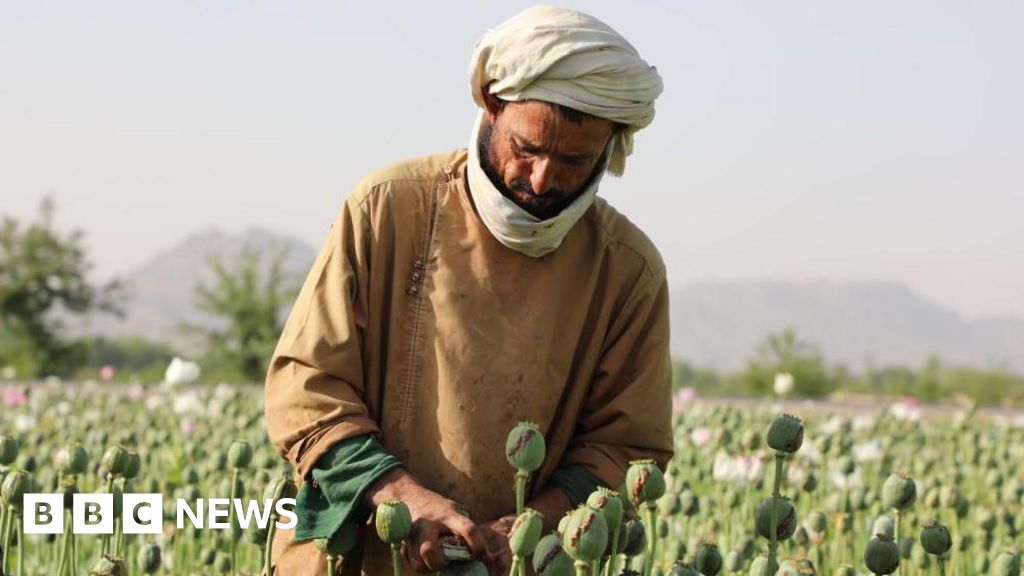
Opium cultivation in Afghanistan has reportedly decreased significantly since a ban was implemented by the Taliban government in April 2022. According to the United Nations Office on Drugs and Crime (UNODC), the area of land used for opium poppy cultivation has reduced by 20% from the previous year, while the overall production of opium has fallen by 32%. Historically, Afghanistan accounted for over 80% of the world’s opium supply, with heroin produced from Afghan opium representing 95% of the European market.
The Taliban government has stated that the opium trade contradicts their religious beliefs and has imposed the ban despite the economic hardships faced by farmers. While many farmers have shifted to harvesting cereal crops, the UNODC noted that poppy farming remains significantly more profitable than alternative crops. As a result, over 40% of farmland has remained unused, attributed to a lack of viable alternatives, limited agricultural outputs, and poor climate conditions.
In 2023, the total area under opium poppy cultivation was estimated to be around 10,200 hectares, primarily in the north-eastern regions, with Badakhshan province having the largest share. Several provinces that were previously involved in opium poppy cultivation have reportedly been declared opium poppy-free.
The report highlights that efforts by the Taliban to eradicate opium fields have occasionally met with resistance from farmers, particularly in the northeast, leading to reported casualties in areas such as Badakhshan. Nevertheless, the majority of farmers have adhered to the ban. Farmers have expressed concerns about the lack of support for transitioning to alternative crops, creating a dilemma between compliance with the ban and economic survival. Some farmers have indicated that they may resort back to poppy cultivation if financial conditions do not improve.
Despite the decline in opium production, the trafficking of synthetic drugs, such as methamphetamine, has reportedly increased. UNODC statistics show a 50% rise in seizures of synthetic drugs in and around Afghanistan in late 2024 compared to the previous year, as organized crime groups increasingly favor products that are easier to produce and less affected by climatic variations.
Source: https://www.bbc.com/news/articles/c5ypq5pdyk8o?at_medium=RSS&at_campaign=rss