
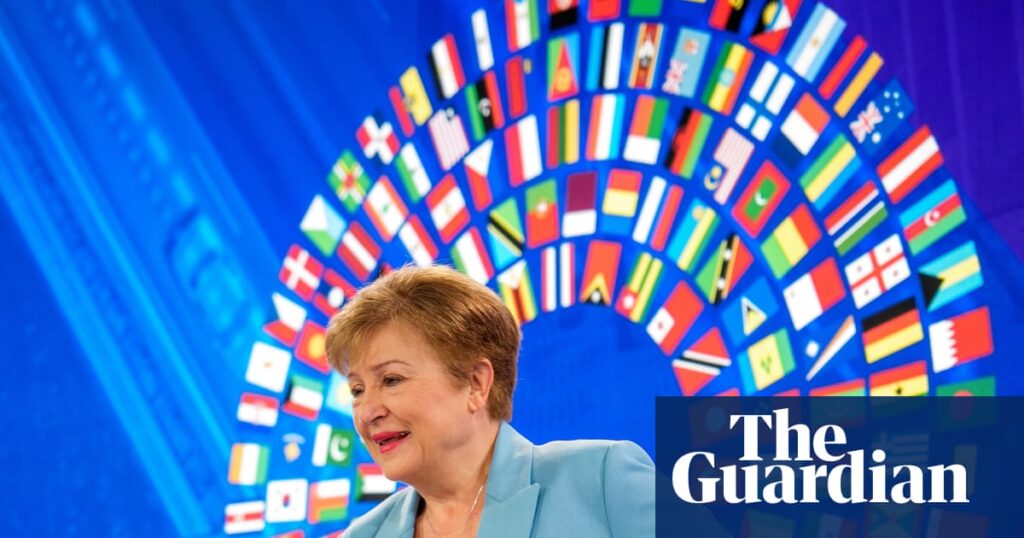
Kristalina Georgieva, the managing director of the International Monetary Fund (IMF), addressed finance ministers in Washington this week, emphasizing concerns about the global economy. During its spring meetings in April, the IMF referred to erratic U.S. trade policies as a “major negative shock.” However, recent expert assessments indicate that global growth has remained stable, as negotiations and new trading links have helped maintain supply chains.
The U.S. economy has been somewhat insulated from trade disruptions, largely due to advancements in artificial intelligence. Nonetheless, the IMF warns that this situation may not be sustainable. In its Global Financial Stability Report, released on Tuesday, the IMF described market conditions as “complacent,” highlighting issues such as high valuations in the technology sector, volatility in government bond markets, and potential risks associated with the growing private credit sector.
Georgieva expressed particular concern regarding non-bank financial institutions, which have increasingly entered the lending market since regulations tightened after the 2008 financial crisis. The IMF cautions that adverse events in this “shadow banking” sector could have significant ramifications for traditional banks, given that they have an estimated $4.5 trillion exposure to these institutions.
Recent collapses of U.S. companies relying heavily on complex private financing have raised further concerns, with figures like Jamie Dimon of JPMorgan signaling that more difficulties may arise. This unease extends to regional banks, as recent market turbulence has highlighted vulnerabilities in the financial system.
As the Trump administration appears focused on international trade issues rather than financial regulation, the IMF calls for increased oversight of the private credit sector. In a press conference, Georgieva raised the question of how to improve this oversight, noting her ongoing concerns.
This complex landscape is mirrored in other economies, with financial pressures affecting global markets. The potential for a sharp correction in markets underscores the interconnectedness of economic conditions, which are currently strained by political and financial instability.
Source: https://www.theguardian.com/business/2025/oct/17/leaders-imf-private-credit-tax-bonds-tariff-washington