
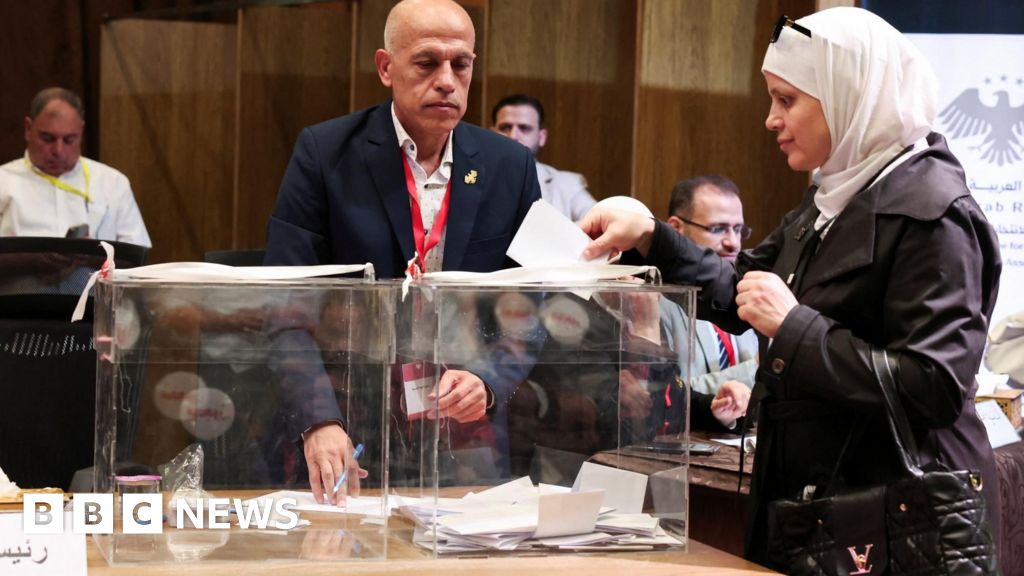
The committee responsible for organizing Syria’s first parliamentary elections since the fall of Bashar al-Assad has reported “significant shortcomings” in the election results. Voter turnout revealed that only 13% of the elected representatives of the new People’s Assembly were female or from minority backgrounds. Out of 119 elected representatives, six were women and ten were from various religious and ethnic minorities.
The elections, which took place on Sunday, did not involve a direct popular vote. Instead, representatives for two-thirds of the 210 seats were selected by electoral colleges, with the remaining seats appointed by Interim President Ahmed al-Sharaa. A spokesperson for the election committee noted that the president’s appointments might address the underrepresentation of certain societal groups.
Notably, 21 seats remained unfilled due to postponed voting in two Kurdish-controlled regions and a southern area experiencing violence between government forces and Druze militias. During a visit to a polling station, Sharaa described the elections as a “historic moment” and emphasized the parliament’s role in overseeing governance during its 30-month term.
The electoral process was overseen by the Higher Committee for the Syrian People’s Assembly Elections, comprised of members selected by the president. They appointed sub-committees responsible for identifying up to 7,000 members from various electoral colleges, which covered 60 districts. Candidates had to be members of these colleges and exclusions were placed on supporter groups of the former regime or those advocating for foreign intervention.
Women constituted 14% of the 1,500 candidates. However, there were no established quotas for female or minority representation. Following the preliminary results, an election committee spokesman acknowledged the inadequate representation of women and Christians in the assembly. Currently, estimates state that Christians make up around 10% of Syria’s population, with Sunni Muslims being the majority.
The committee also indicated plans for supplementary ballots in regions currently controlled by Kurdish forces, contingent on progress in local governance agreements. Reactions from local groups, such as the Syrian Democratic Council, criticized the elections, asserting they did not reflect the will of the Syrian populace or represent all regions. Moreover, tensions remain high in southern Syria, where government forces recently clashed with Druze militias, resulting in significant fatalities.
Source: https://www.bbc.com/news/articles/c3vz44zzp5zo?at_medium=RSS&at_campaign=rss