
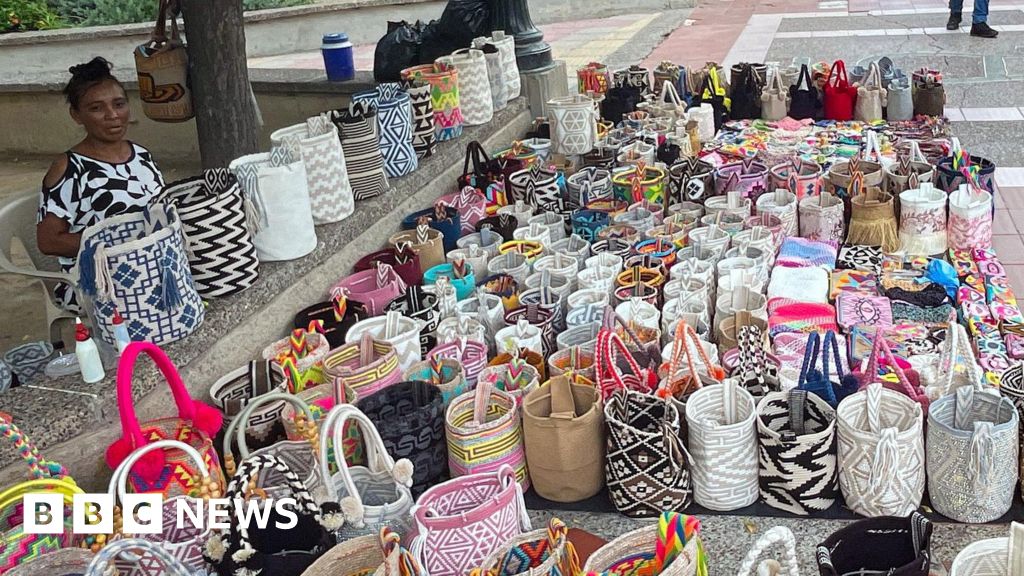
In Riohacha, Colombia, street seller Sandra Aguilar believes that each handwoven bag, known as a mochila, represents a piece of her cultural heritage. Historically crafted by the Wayuu, the largest indigenous group in Colombia, these bags have gained popularity not only within the country but also among international tourists. In recent years, mochilas have appeared in global boutiques and fashion events, as well as on platforms like Etsy and Instagram.
The Wayuu community, comprising roughly 380,000 people in Colombia and extending into Venezuela, has a rich tradition of textile weaving. Each mochila displays intricate geometric patterns that convey clan identities and spiritual beliefs, which have been passed down through generations. Weaving serves as a crucial source of income for many in La Guajira, the second-poorest province in Colombia, where two-thirds of residents live in poverty. Improved sales of mochilas have positively affected some families, enabling children to access higher education.
However, the rise in global demand has also introduced challenges, such as the exploitation of artisans and concerns about the loss of traditional crafting methods. Some Wayuu women are collaborating with socially-conscious entrepreneurs to pursue fairer export markets while highlighting the cultural significance of mochilas.
Prices for mochilas vary considerably based on quality and design complexity, from around $20 for simpler bags to several hundred dollars for more intricate ones. With increasing globalization, many artisans have shifted to faster production techniques, leading to simpler designs.
Laura Chica, a Colombian entrepreneur, founded Chila Bags in 2013, focusing on high-quality products that reflect traditional craftsmanship. While some brands aim to honor indigenous artistry, there are concerns about those that prioritize quick profits over fair compensation for artisans.
Efforts are being made to support Wayuu weavers through educational programs and fair trade principles. Leaders like Paula Restrepo advocate for equitable purchasing systems, while artisans learn to navigate markets more effectively. Meanwhile, the presence of influencers promoting mochilas online has transformed marketing strategies, prompting new concerns over design authenticity and profit distribution. As recognition of the Wayuu community grows, artisans like Ms. Aguilar remain committed to preserving their cultural heritage amidst these changes.
Source: https://www.bbc.com/news/articles/c62lnkvmn12o?at_medium=RSS&at_campaign=rss