
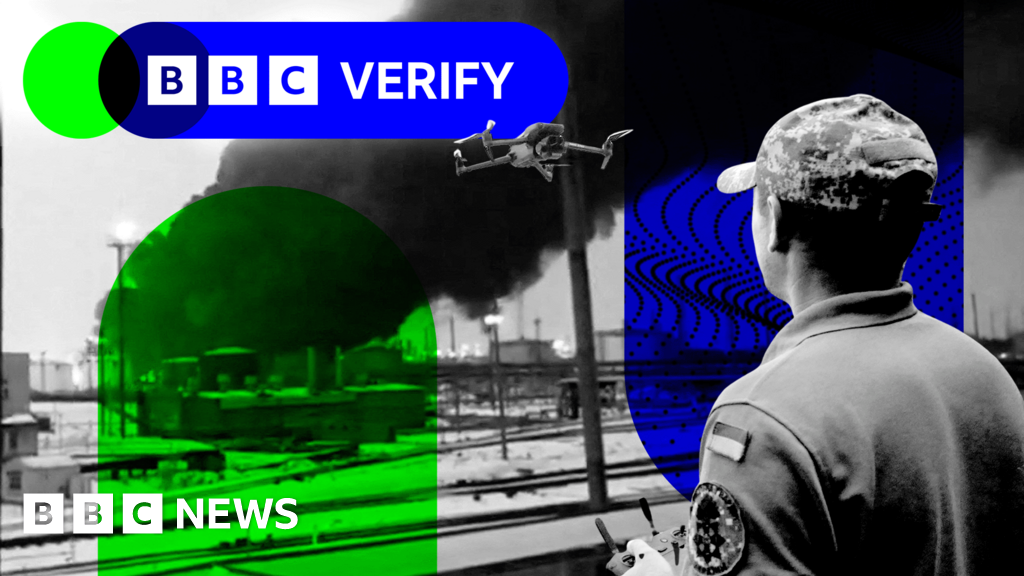
In recent months, Ukraine has significantly escalated its attacks on Russian oil refineries, leading to fuel shortages and price increases in specific areas of the country, according to reports by BBC Verify and BBC Russian. Analysis of Russian media and verified footage indicates a sharp rise in drone strikes on refineries, particularly in August and September. Since January, 21 out of the 38 large refineries in Russia have been targeted, and successful strikes have risen by 48% compared to the previous year.
The effects of these attacks are reportedly being felt by ordinary Russian citizens, as videos verify the presence of long queues at petrol stations. Some gas stations have paused operations, with one manager stating that their decision was driven by a desire to avoid financial losses.
Ukraine’s security service, the SBU, did not comment on the situation. Nevertheless, President Volodymyr Zelensky characterized damaging Russia’s oil industry as a strategic approach to encourage negotiations. He emphasized in a September address that striking at refineries and terminals represents one of the most effective means of restricting Russia’s war capabilities.
The frequency of attacks peaked in August with 14 refinery strikes, followed by an additional eight in September. Some targets were located deep within Russia, such as the Gazprom Neftekhim Salavat refinery in Bashkortostan, which was attacked twice in late September.
Ukrainian strikes are reportedly aimed not only at large refineries critical for civilian fuel supply but also at facilities supplying military logistics. Recent attacks on refineries near Volgograd and Moscow highlight this dual objective.
While the impact of these attacks on overall fuel production is uncertain, BBC Verify’s analysis indicates that at least ten refineries have partially or fully suspended operations since August. There are reports of significant declines in national fuel production on specific days.
In Russia, measures are being taken to manage the fuel situation, including reports of gasoline rationing in occupied Crimea. Despite rising prices, the Russian government maintains that the fuel supply remains stable, although some regions report high demand and empty gas stations.
The extent to which these attacks have impacted Russia’s revenue and capability to fund its military actions remains a subject of analysis. Although most of Russia’s oil exports consist of unrefined crude that has not been notably affected, potential future Western sanctions could exacerbate the situation, increasing pressure on the Russian economy.
Source: https://www.bbc.com/news/articles/czx020k4056o?at_medium=RSS&at_campaign=rss