
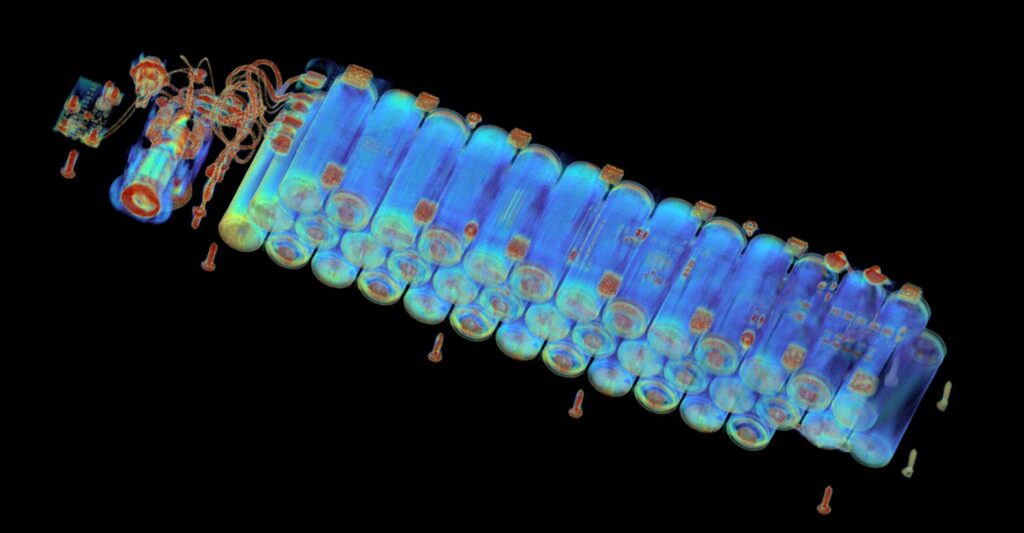
Lumafield has published the findings of a study examining lithium-ion batteries, highlighting significant quality disparities between reputable brands and low-cost options available through various online retailers. The study utilized computed tomography (CT) scanners to conduct a detailed analysis of over 1,000 lithium-ion batteries, identifying dangerous manufacturing defects in cheaper and counterfeit variants that raise safety concerns.
The research focused on 18650 lithium-ion battery cells, commonly found in a wide range of products, including electric toothbrushes, power tools, e-bikes, power banks, and electric vehicles. Batteries were obtained from ten brands, consisting of three original equipment manufacturers (OEMs) such as Samsung and Panasonic, three vendors that resell OEM batteries after relabeling, and four companies offering low-cost or counterfeit options found on large online platforms.
Out of the 1,054 batteries scanned, 33 exhibited a serious defect known as negative anode overhang, which can heighten the risk of internal short-circuiting and battery fires. All defective batteries were traced back to the low-cost and counterfeit brands. Some of these counterfeit batteries misrepresented their specifications, claiming capacities as high as 9,900 mAh, whereas legitimate 18650 batteries generally range between 3,000-3,450 mAh. Actual tests indicated that some counterfeit batteries had capacities below 1,300 mAh.
According to Lumafield’s data, low-cost and counterfeit batteries had an approximate 8 percent chance of featuring the dangerous defect, with certain brands demonstrating even higher rates. In contrast, no defects were identified in the OEM batteries, and even rewrap batteries showed fewer issues when compared to their low-cost counterparts.
While defects do not guarantee failure, they can elevate the likelihood of hazardous incidents, especially under adverse conditions. The study suggests that batteries from established manufacturers are generally safer, and although rewrap batteries might perform adequately, the obscured sourcing can introduce risks related to quality assurance. Overall, the research emphasizes the importance of purchasing batteries from reputable sources to minimize potential hazards.
Source: https://www.theverge.com/news/784966/lumafield-x-ray-ct-scan-lithium-ion-battery-risks-manufacturing-defect