
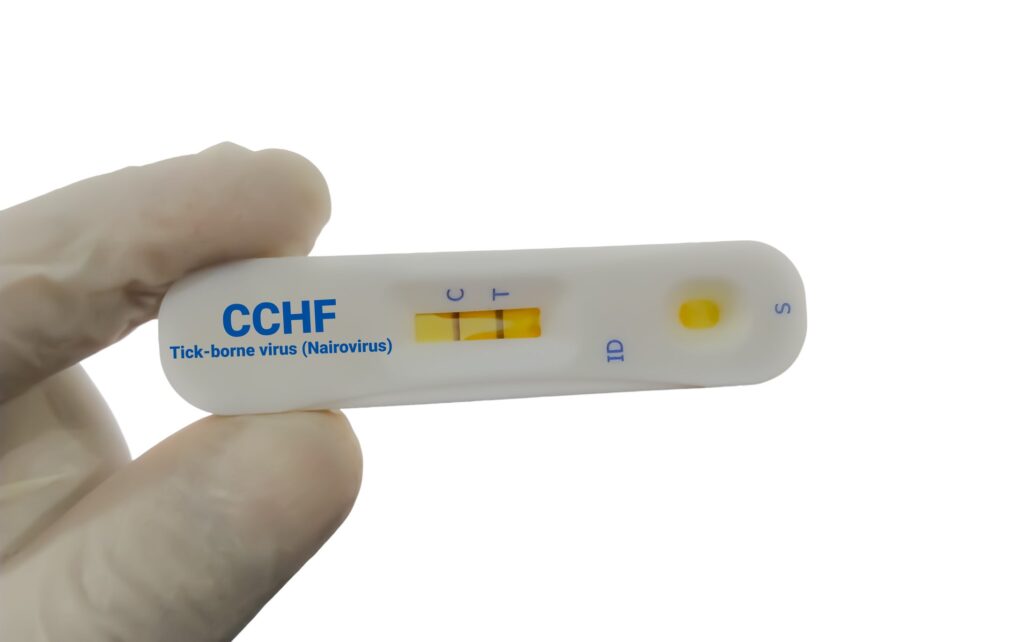
The Crimean-Congo hemorrhagic fever virus (CCHFV), categorized as a biosafety level 4 pathogen and a potential bioterrorism agent, is known to cause severe viral hemorrhagic fever with mortality rates up to 40%. Endemic in various regions including Africa, the Balkans, the Middle East, and Asia, CCHFV has recently reached Western Europe, likely spread by ticks on migratory birds. Currently, there is no approved vaccine or specific treatment for this virus.
Scott Pegan, a professor at the University of California, Riverside School of Medicine, has received a $3.4 million grant from the National Institutes of Health for a five-year project aimed at developing protective antibodies against CCHFV. This initiative is being conducted with an international team and began this month.
Considered a priority by the World Health Organization, CCHFV is the reference virus for the nairovirus genus, which includes several emerging pathogens. The project will focus on studying survivors of CCHFV in Kazakhstan, Turkey, and Uganda to identify protective antibodies. It also aims to develop monoclonal antibody treatments effective against various strains of the virus.
This collaborative effort involves researchers from the University of Maryland, the U.S. Army Medical Research Institute of Infectious Diseases, the Centers for Disease Control and Prevention, and several international institutions.
- Why it matters: The development of a treatment for CCHFV could enhance public health readiness against viral hemorrhagic fevers.
- The success of this research could provide a framework for addressing future nairovirus outbreaks globally.
- The latest: The project commenced this month, bringing together a multidisciplinary international team to address CCHFV research.
Source: https://news.ucr.edu/articles/2025/09/23/nih-grant-supports-research-dangerous-emerging-virus
Source: https://news.ucr.edu/articles/2025/09/23/nih-grant-supports-research-dangerous-emerging-virus