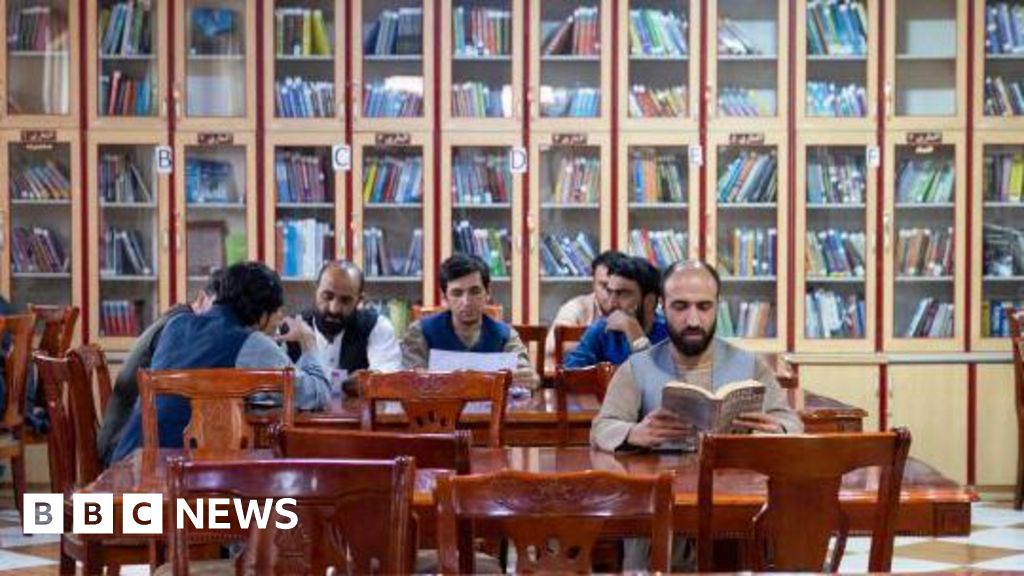
The Taliban government has enacted a ban on books authored by women within Afghanistan’s university teaching framework. This decision is part of a larger directive that includes prohibiting the teaching of subjects related to human rights and sexual harassment. Approximately 140 female-authored books, including titles such as “Safety in the Chemical Laboratory,” were identified among 680 materials deemed problematic due to perceived conflicts with “anti-Sharia and Taliban policies.”
Additionally, universities have been instructed to cease instruction in 18 subjects, with officials citing conflicts with Sharia principles and the regime’s educational policies. These restrictions represent a continuation of a broader pattern of limitations introduced since the Taliban regained power four years ago.
Recently, directives from the Taliban’s supreme leader also included a ban on fiber-optic internet in at least 10 provinces, justified as a means to prevent immorality. Notably, women and girls have faced significant challenges under these regulations, as they are barred from pursuing education beyond the sixth grade, and vital midwifery courses were closed in late 2024.
Specifically, six of the 18 banned subjects focus on women, such as Gender and Development and Women’s Sociology. The Taliban assert that their interpretation of Afghan culture and Islamic law is in alignment with women’s rights, despite this apparent curtailment of educational resources.
A member of the reviewing committee confirmed that books by women are not permitted in academic settings. Affected authors, including former deputy minister Zakia Adeli, expressed expectations of curriculum changes based on the Taliban’s historical approach to women’s rights.
The list of banned materials notably includes a significant number of books published in Iran, which the Taliban is reportedly seeking to eliminate in order to prevent Iranian influence in the educational sector. This move is seen as problematic by some educators, who suggest that the absence of these resources will create gaps in the academic landscape. The Taliban’s Ministry of Education has been approached for further comment on these developments.
Source: https://www.bbc.com/news/articles/c0kn7yyzrjgo?at_medium=RSS&at_campaign=rss