
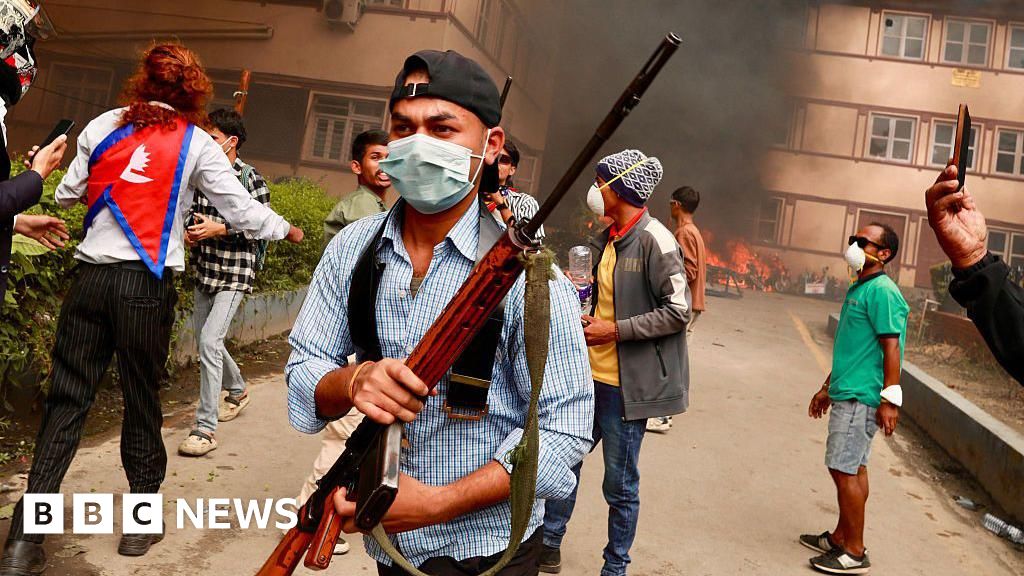
Nepal has recently experienced significant unrest, prompting the military to deploy patrols in Kathmandu, following widespread protests against corruption and nepotism. These protests escalated into acts of violence, including arson and vandalism. In response to the turmoil, Prime Minister KP Sharma Oli resigned, leaving a leadership gap. Protesters have targeted government buildings, including the parliament, and have accused infiltrators of hijacking their peaceful movement.
As of Wednesday, curfews have been imposed nationwide, with authorities warning that anyone engaged in violence will face punishment. Reports indicate that 27 individuals have been arrested in connection with the unrest, and 31 firearms have been seized. Following a deadly clash on Monday that resulted in the deaths of over 20 protesters, the military stated it aims to control the situation and prevent further violence.
The demonstrations were initially ignited by the government’s attempted ban on social media platforms, including popular sites like WhatsApp and Instagram. This ban was swiftly lifted; however, public dissatisfaction with the political elite had been building before the protests, exacerbated by a campaign highlighting the luxurious lifestyles of politicians’ children. As protests intensified, activists claimed their movement was misrepresented by violent elements.
While the streets appeared calmer on Wednesday, smoke from previously burned structures lingered. Protesters expressed concern about their cause being co-opted by opportunists. They affirmed their commitment to a non-violent approach, emphasizing a desire for accountability and transparency within the government.
The future political landscape remains uncertain, as the Gen Z protesters call for a government led by competent, non-corrupt leaders unencumbered by traditional party affiliations.
Source: https://www.bbc.com/news/articles/cjd1ndmrej0o?at_medium=RSS&at_campaign=rss