
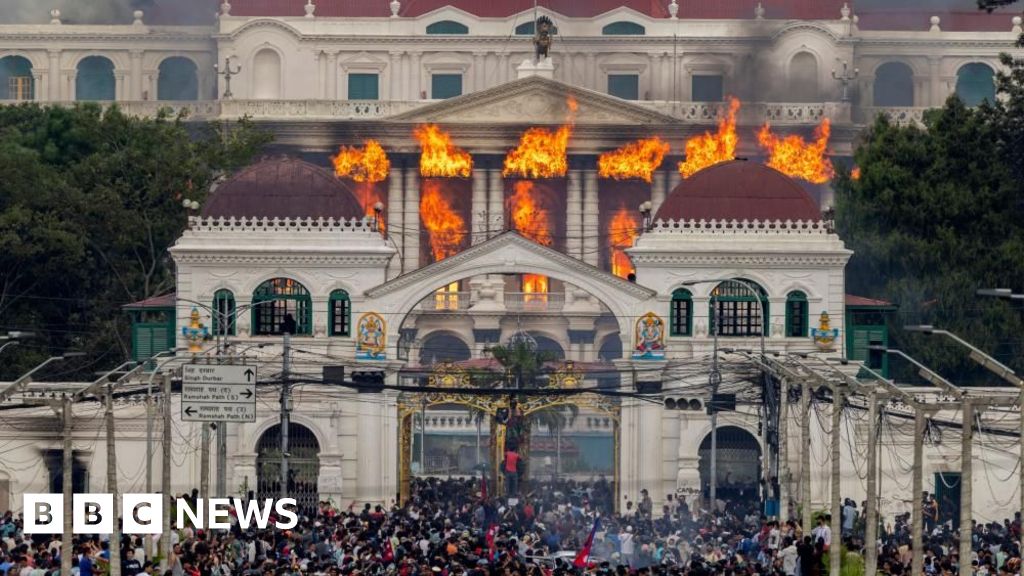
Nepal’s Prime Minister KP Sharma Oli has resigned during a period of significant unrest in the country, following the deaths of 19 anti-corruption protesters in clashes with police. The resignation comes amid escalating protests in Kathmandu and other regions, where demonstrators have attacked government buildings, including setting fire to parliament. Three additional fatalities have been reported since Oli’s resignation, and jail officials indicated that 900 inmates escaped from prisons in the western districts amidst the chaos.
The protests were initially sparked by a ban on social media platforms, which the government imposed for not registering by a certain deadline. Although the ban was lifted on Monday, the protests had already transformed into a mass movement. The Nepal army has accused demonstrators of taking advantage of the crisis to cause damage and theft, threatening a security response if unrest persists.
With the prime minister’s departure, there is uncertainty about the future leadership of the country. Reports indicate that some political leaders have sought refuge with security forces for safety. The protesters, rallying under an anti-corruption banner, have yet to clearly articulate their demands, and there appears to be no centralized leadership among them.
Inside parliament, protesters celebrated, and some vandalized the building, leading to significant property damage. The protests are compounded by broader concerns about government corruption, which has been a persistent issue in Nepal.
In the lead-up to recent events, social media campaigns had highlighted allegations of corruption involving politicians’ families. With several neighborhoods under curfew and violence escalating, Oli’s resignation has opened discussions for a potential new leader, as confirmed by an aide to President Ramchandra Paudel.
Source: https://www.bbc.com/news/articles/c0m4vjwrdwgo?at_medium=RSS&at_campaign=rss