
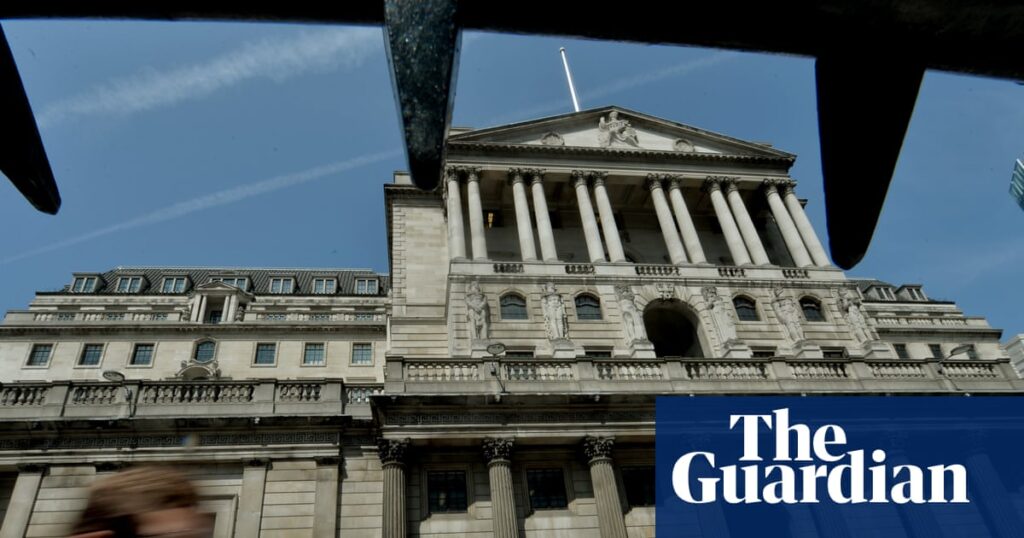
The Institute for Public Policy Research (IPPR) has suggested that Rachel Reeves consider introducing a new tax on banks and request the Bank of England to pause bond sales, as a means to address the government’s annual £22 billion losses stemming from quantitative easing (QE). Carsten Jung, the IPPR’s associate director for economic policy, highlighted in a report that given the current constraints on public finances, it is essential to manage the costs associated with QE.
Initially implemented in 2009 to stimulate the economy during the global financial crisis, QE involved the purchase of £895 billion in bonds from UK banks. Presently, the Bank of England is engaging in “quantitative tightening” (QT), selling these bonds at a rate of £100 billion per year, often at a loss. Under a previous commitment by former Chancellor Alistair Darling, the financial risks linked to QE fall on the Treasury, leading to significant impacts on government finances.
The rising base interest rate, currently at 4% to counter inflation, adds to these losses as the Bank pays higher interest on reserves than it receives from the bonds. The IPPR estimates that this situation results in a £22 billion annual impact on public finances. Jung proposed a new tax on the reserves of major banks that have significantly profited since before the COVID-19 pandemic, suggesting this could generate around £8 billion annually.
The report also compared the recommended bank levy to a tax on bank deposits implemented by former Prime Minister Margaret Thatcher during the 1980s. Additionally, it urged the Chancellor to recommend halting the bond sales to the Bank amid recent fluctuations in gilt market stability. The Bank of England’s monetary policy committee is scheduled to meet on September 18 to review QT’s pace.
A spokesperson from the Bank reiterated that tax and spending decisions are the government’s responsibility, while a Treasury spokesperson emphasized the importance of focusing on economic growth to strengthen public finances.
Source: https://www.theguardian.com/politics/2025/aug/29/treasury-tax-big-banks-quantitative-easing-windfalls-thinktank