
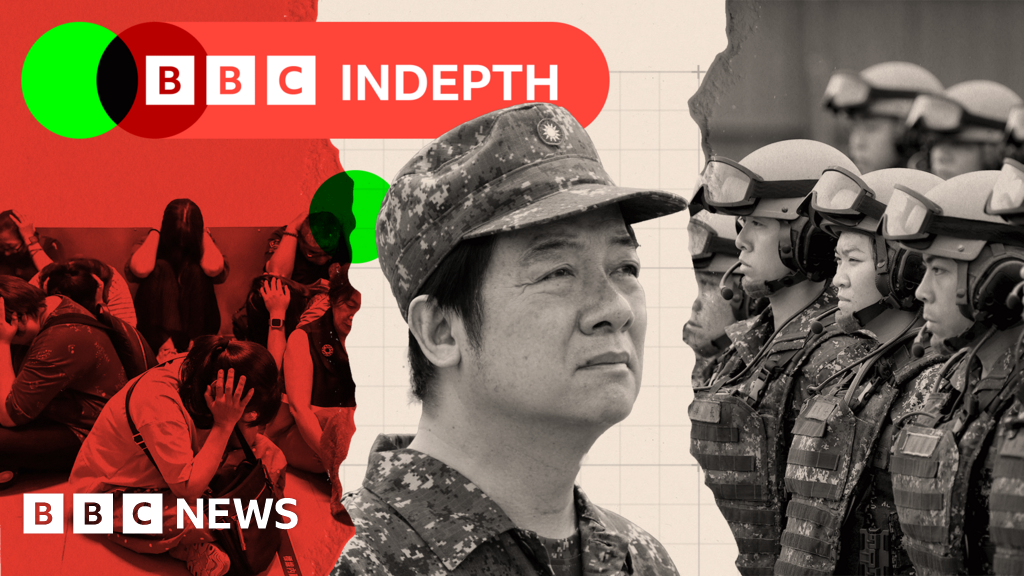
In recent civil defense exercises in Taiwan, residents on the island of Kinmen took part in drills simulating a potential military attack from China. Participants responded to air raid sirens by seeking shelter and treating mock injuries, aimed at preparing for a possible conflict. These drills coincide with Taiwan’s increasing military readiness amid ongoing tensions with China, which claims Taiwan as its territory and has not ruled out the use of force for reunification.
Taiwan’s President William Lai is advocating for significant military reforms and defense spending increases to enhance national security. However, opinion among Taiwanese citizens varies on the necessity and potential effectiveness of these measures. A recent survey indicated that while a considerable portion of the population acknowledges a military threat from China, many believe an actual invasion is unlikely in the near future.
Lai’s administration seeks to boost defense spending by 23% in the coming year, with plans to allocate up to 5% of GDP by 2030. The government has also extended military conscription, improved pay and benefits for soldiers, and revamped training programs. These steps address longstanding issues of troop shortages and soldier morale.
Public sentiment is mixed; though some view the drills as essential for national readiness, skepticism persists. For example, residents on Kinmen express ambivalence, seeing China more as a trading partner than a military threat. Many emphasize that relations have improved in recent years, citing economic interdependence.
The ongoing geopolitical situation raises questions regarding the impact of Taiwan’s military policies on its relationship with China. As military tensions escalate in the region, how Taiwan navigates its defense strategy could shape the future of cross-strait relations.
Source: https://www.bbc.com/news/articles/cp94v42gmg9o?at_medium=RSS&at_campaign=rss