
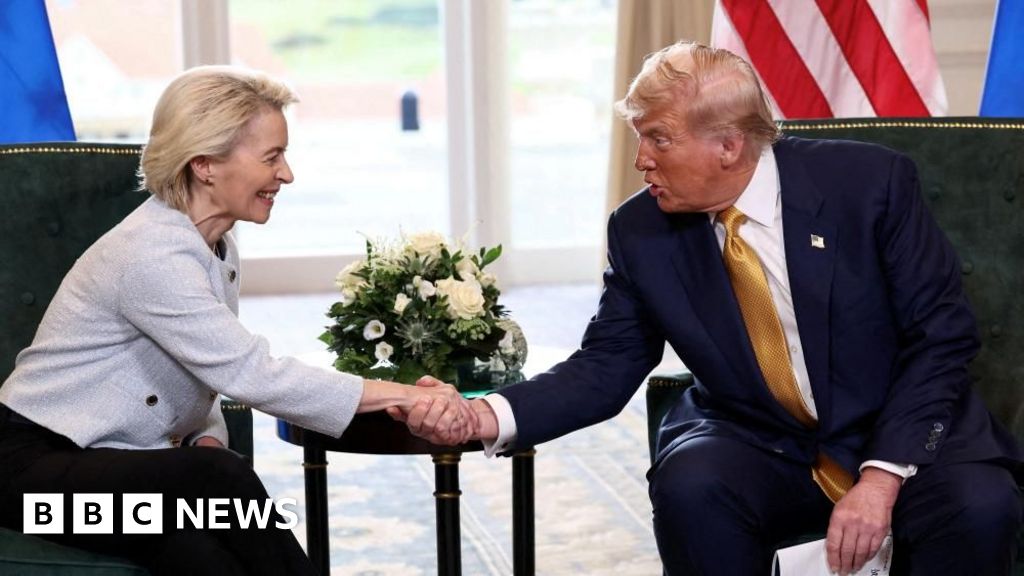
US President Donald Trump has decided against imposing high tariffs on pharmaceuticals and semiconductors imported from the European Union (EU). Last month, he indicated that these sectors were not included in the US-EU trade agreement, which could have resulted in tariffs of 250% for pharmaceuticals and 100% for semiconductors.
Recent updates from the US-EU agreement state that tariffs on EU pharmaceuticals and semiconductors will instead be limited to 15%, aligning with tariffs for most other sectors within the trade deal. The US and EU characterized this adjustment as a “first step” that could evolve as their trading relationship progresses.
However, existing tariffs of 27.5% on car exports will remain until the EU eliminates all tariffs on US industrial goods. This trade agreement was initially outlined during a meeting in Scotland between Trump and European Commission President Ursula von der Leyen. They reached a consensus to reduce tariffs on most EU exports to 15%, which is lower than the originally proposed rates but still higher than the 10% secured by the UK.
Concerns arose regarding the potential exclusion of pharmaceuticals and semiconductors due to Trump’s earlier threats to increase tariffs significantly, even suggesting rates could reach up to 250%. Ireland, a significant exporter of pharmaceuticals to the US, along with other European nations, awaited confirmation regarding tariff protections. Following the new agreement, Ireland’s Deputy Prime Minister Simon Harris expressed support for the lowered tariffs, viewing it as beneficial for Irish exporters.
Under the terms of the deal, the US will implement the 15% tariff on various European goods, including semiconductors and lumber, beginning September 1. In exchange, the EU will eliminate tariffs on all US industrial goods. The reduction of the 27.5% tariff on European motor vehicle exports to 15% will occur once Europe legislates the removal of its tariffs on US exports.
Von der Leyen emphasized that the deal aims to provide predictability for businesses and consumers within the trading bloc. US Secretary of Commerce Howard Lutnick echoed sentiments regarding the potential benefits for American producers and workers, framing the agreement as a significant outcome after extensive negotiations regarding tariff threats.
Source: https://www.bbc.com/news/articles/ckgjwk8gze7o?at_medium=RSS&at_campaign=rss