
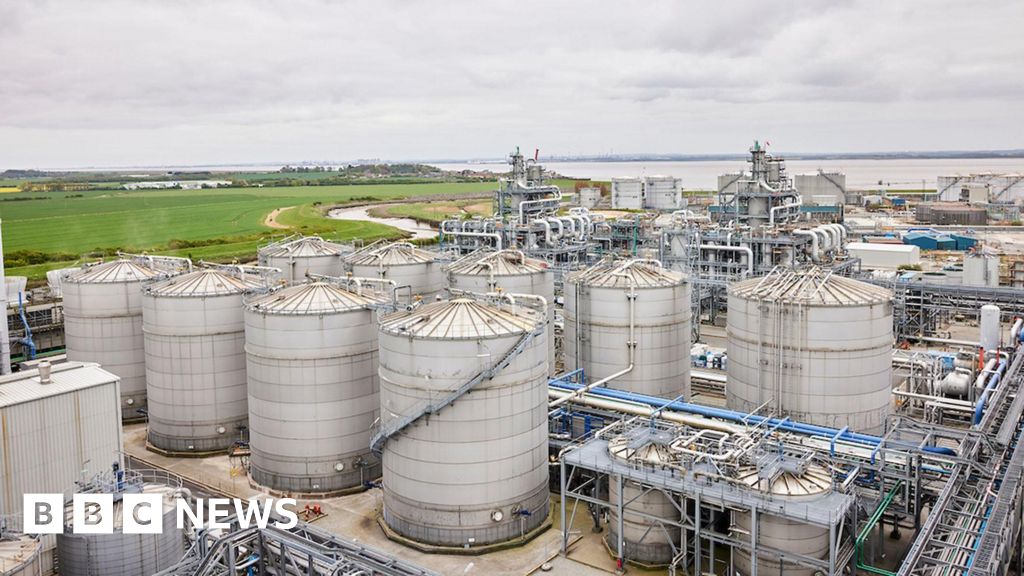
Vivergo, one of the UK’s two bioethanol plants, has announced the cessation of its production activities and plans to lay off its 160 employees starting Tuesday. This decision comes after the government confirmed on Friday that it would not provide financial support to the bioethanol sector, which is increasingly challenged by imports of US ethanol.
Owned by Associated British Foods, Vivergo cited the lack of support as a reason for its closure, asserting that it would continue to operate only as a “heavily loss-making” business otherwise. As a consequence, the site is expected to be fully operational until the end of the year before demolition begins. The government has stated that assisting the bioethanol sector would not be a prudent use of taxpayer funds and would fail to address the industry’s long-standing issues.
Bioethanol, utilized as an additive in fuels to mitigate harmful emissions, can be derived from waste oil or grains. Following a recent trade deal, the UK has lifted tariffs on imported US ethanol, which has compounded concerns within the domestic bioethanol sector. This trade agreement has allowed for 1.4 billion liters of US ethanol to enter the UK without tariffs, significantly paralleling the size of the domestic market.
Prior to this agreement, the UK bioethanol industry had expressed grievances about the competitive disadvantage posed by US imports, which are classified as waste byproducts, unlike domestic products. Vivergo represents one of the two domestic production sites at risk of closure without government intervention. The other site, managed by German firm Ensus in Redcar, is currently awaiting a decision on potential support to maintain its CO2 production.
Vivergo had plans to initiate CO2 capture from its bioethanol production process but had not yet implemented these plans. The closure is expected to affect suppliers and agricultural sectors, particularly local farmers struggling to find markets for non-food-grade wheat. Additionally, industry representatives have voiced concerns about the UK’s increasing dependence on imports for both CO2 and ethanol, a situation described as “risky.” The government has asserted that its focus has been on broader national interests and job protections in key sectors, such as automotive and aerospace.
Source: https://www.bbc.com/news/articles/c3v3ey0n71xo?at_medium=RSS&at_campaign=rss