
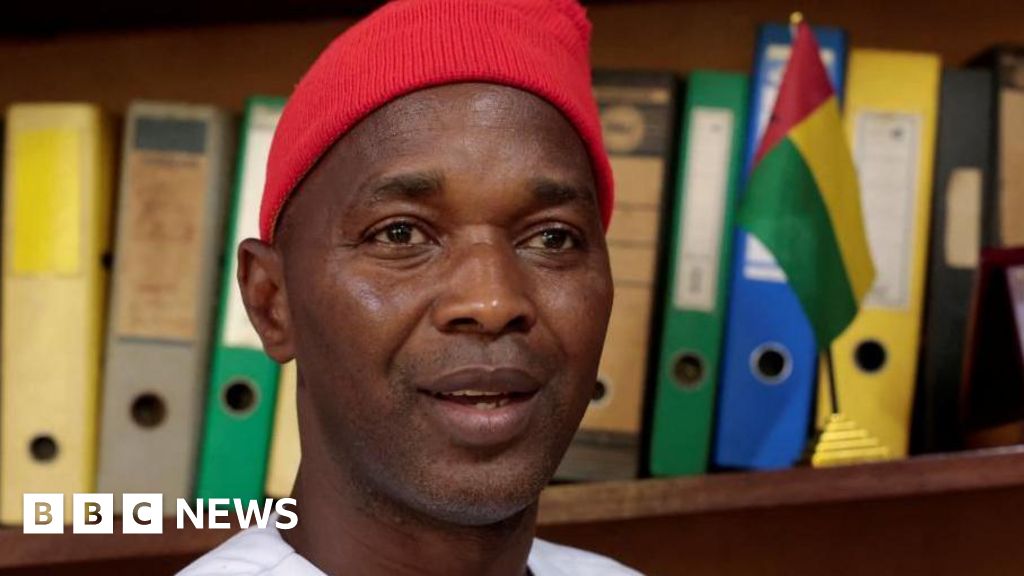
Nigeria has granted asylum to Fernando Dias da Costa, a presidential candidate from Guinea-Bissau, following a recent coup that disrupted the announcement of election results. Dias, 47, who represented the Party for Social Renewal, had sought refuge at the Nigerian embassy due to threats against him, as per Nigeria’s foreign minister.
The coup occurred three days after the presidential election held on November 23, where both Dias and incumbent Umaro Sissoco Embaló claimed victory. The electoral commission has since reported that it cannot release the results because armed assailants destroyed essential documents and a computer server containing the election data. Amidst the political turmoil, a delegation from the Economic Community of West African States (ECOWAS) is present in Guinea-Bissau, pressing the military rulers to relinquish power and allow the electoral process to continue.
Since the coup, significant restrictions have been placed on public demonstrations and activities deemed disruptive to peace. Tensions in the capital city, Bissau, remain high, with reports of armed militia invading the headquarters of the PAIGC party, a historical political movement that had been barred from fielding candidates in the recent election. The leader of PAIGC, Domingos Pereira, was reportedly arrested on the day of the coup.
Dias managed to flee his campaign headquarters amidst the coup’s onset. Nigeria’s Foreign Minister confirmed President Bola Tinubu’s decision to provide protection to Dias and requested that ECOWAS deploy military personnel to the Nigerian embassy for his safety. After recent talks between the ECOWAS delegation and the junta, discussions were described as productive but fraught with tension.
The legitimacy and motives behind the coup have prompted speculation. Some accuse Embaló of orchestrating a “simulated coup,” perhaps as a strategy to delay the release of election results. Embaló has faced allegations of quashing dissent during previous crises but has not publicly addressed these new claims. Guinea-Bissau has experienced numerous coups and attempts over the last several decades, raising questions about its political stability following independence from Portugal in 1974.
Source: https://www.bbc.com/news/articles/ce3wq2zznz1o?at_medium=RSS&at_campaign=rss