
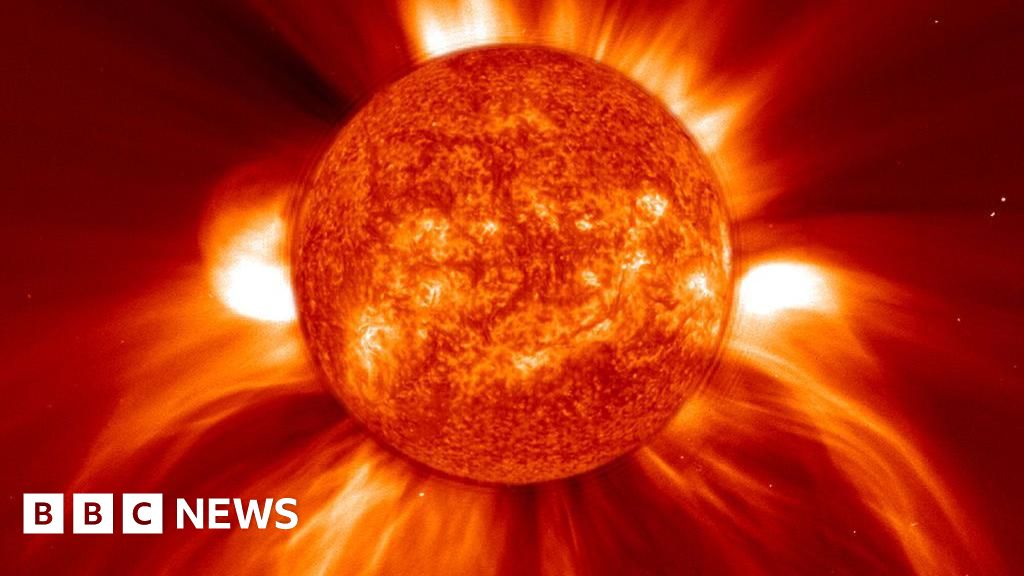
India’s first solar observation mission, Aditya-L1, is anticipated to play a significant role in 2026 as the Sun reaches a period of maximum activity. This event occurs approximately every 11 years when the Sun’s magnetic poles flip, leading to increased solar storms and coronal mass ejections (CMEs). A CME can expel billions of tons of charged particles at speeds of up to 3,000 kilometers per second.
During low-activity periods, two to three CMEs are typically produced daily, but experts forecast that this number could rise to over ten per day during the peak in 2026. Prof. R. Ramesh from the Indian Institute of Astrophysics emphasizes the importance of studying CMEs, not only for scientific understanding but also to protect infrastructure on Earth and in space.
CMEs can create geomagnetic storms that interfere with satellites and disrupt communication and power systems. Although they rarely pose a direct threat to human life, significant storms have previously caused extensive damage. For instance, the Carrington Event in 1859 disrupted global telegraph lines, and more recent events have led to power outages and operational disruptions in air traffic control.
Aditya-L1’s main instrument, the Visible Emission Line Coronagraph (VELC), aims to provide continuous observation of the solar corona, offering insights into eruption dynamics. This mission’s capacity to monitor CMEs in visible light allows scientists to gauge temperature and energy levels, crucial for predicting their potential impact on Earth.
In preparation for heightened solar activity, researchers are analyzing a notable CME recorded on September 13, 2024. This event, while classified as medium-sized, was massive, with a mass of 270 million tonnes and a temperature of 1.8 million degrees Celsius. Insights from these observations will inform strategies to safeguard satellites and enhance understanding of near-Earth space conditions.
Source: https://www.bbc.com/news/articles/c8dy9qp71v2o?at_medium=RSS&at_campaign=rss