
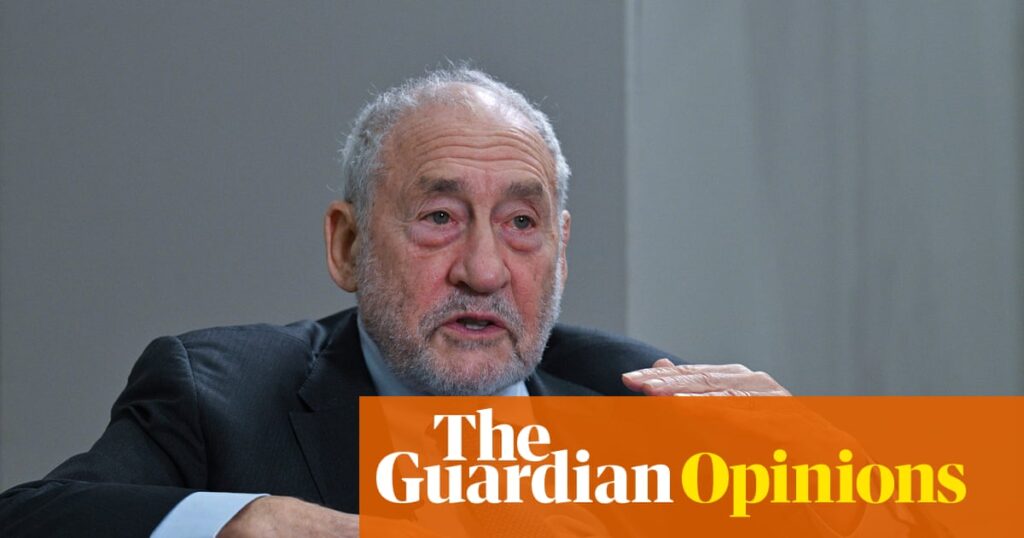
In a recent case involving Swiss tycoons presenting Donald Trump with a gold bar and a Rolex watch, questions have arisen about the implications of wealth concentration on political access and policy change. Following the presentation of these gifts, the U.S. government announced a reduction in tariffs, highlighting concerns over the influence of wealth on political decision-making. Nobel laureate Joseph Stiglitz’s latest work addresses the issue of inequality, which he sees as a crisis exacerbating political, social, and environmental challenges globally.
The World Bank defines “high income inequality” as a condition affecting 90% of the world’s population, with the U.S. noted as having the highest level of inequality among G7 countries. Stiglitz argues that the prevailing economic system is increasingly unable to reconcile its contradictions, necessitating a new framework for progress. The G20 has published its first inequality report, which Stiglitz supports, pointing out that the wealthiest 1% captured 41% of all new wealth since 2000, while the bottom half received only 1%. This growing wealth disparity correlates with increasing food insecurity, affecting 2.3 billion individuals, an increase of 335 million since 2019.
The report suggests that extreme inequality arises from specific economic and political choices rather than external factors like globalization or technology. Actions such as financial deregulation, weakened labor protections, and reduced tax rates for corporations and high-income individuals are cited as contributors to this problem. Stiglitz also notes the heightened risk of political instability in highly unequal nations.
To address these issues, the G20 report advocates for a redesign of global economic governance, taking inspiration from the Bretton Woods Agreement. Proposed reforms include adjustments to intellectual property laws, trade agreements, global financial systems, tax rules, and sovereign debt structures. Stiglitz emphasizes the need for an International Panel on Inequality to enhance knowledge and scrutiny of these issues, aiming to foster a fairer global order.
Source: https://www.theguardian.com/commentisfree/2025/nov/30/the-guardian-view-on-the-inequality-emergency-why-a-nobel-prize-winners-warning-must-be-heeded