
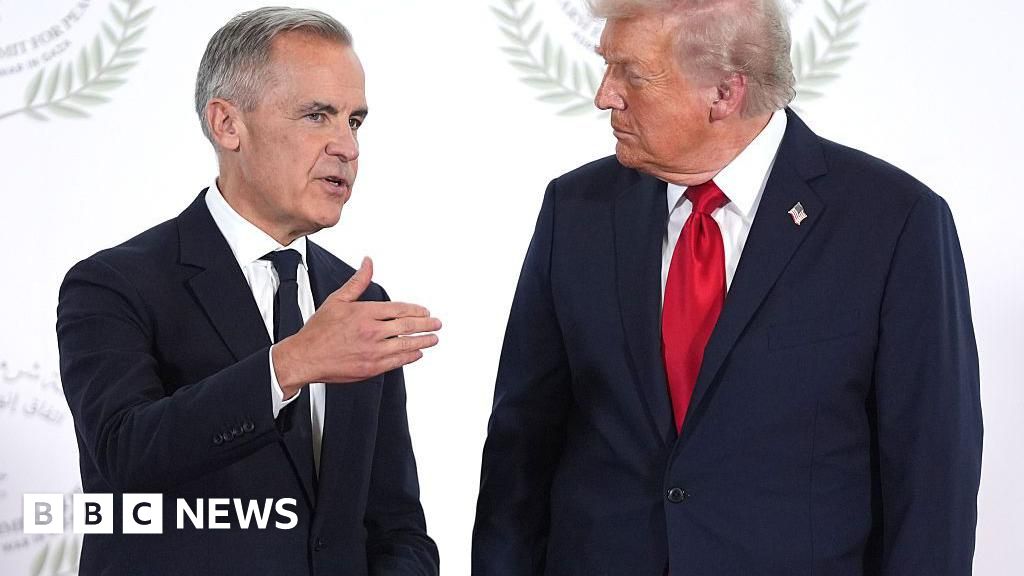
Canada’s Prime Minister Mark Carney has indicated a measured approach to resuming trade discussions with the United States. Recently, he downplayed the significance of his communications with U.S. President Donald Trump, stating that he would engage with him when necessary and perceiving no urgent issues demanding immediate action.
Criticism of Carney’s lack of urgency remains, prompting questions about whether Canada is altering its stance in trade negotiations. Despite this, Carney is set to travel to Washington next week for the FIFA World Cup draw, where he may coincide with Trump. He has noted that they occasionally exchange brief messages, but emphasized that the focus should be on substantive negotiations rather than minor interactions.
Analyst Chris Sands observes that there’s considerable posturing from both leaders, as each seeks to project a sense of nonchalance while negotiations continue to be pressing. The discussions faced a setback last month after Trump reacted negatively to an Ontario commission advertisement criticizing tariffs, which may have contributed to the current stall in talks.
While formal negotiations have paused, Canadian representatives are still active in advocating for their interests with U.S. lawmakers. Notably, the U.S. has instituted tariffs on various Canadian goods, significantly affecting crucial sectors like aluminum and steel, with 35% levies imposed on most goods. About three-quarters of Canada’s exports go to the U.S., placing economic vulnerability on the Canadian side.
Carney’s recent international travels aim to bolster foreign investment in Canada, aligning with his goal of doubling non-U.S. exports over the next decade. His administration plans to offer financial relief to sectors impacted by U.S. tariffs, though pressure mounts for quicker resolutions, especially in provinces like Manitoba where job losses from tariffs have been significant.
With the U.S. midterm elections approaching and a review of the USMCA free trade agreement scheduled for 2026, the future of trade relations remains uncertain. The Office of the United States Trade Representative will hold hearings in December, which could influence future negotiations.
Source: https://www.bbc.com/news/articles/c17x025jj21o?at_medium=RSS&at_campaign=rss