
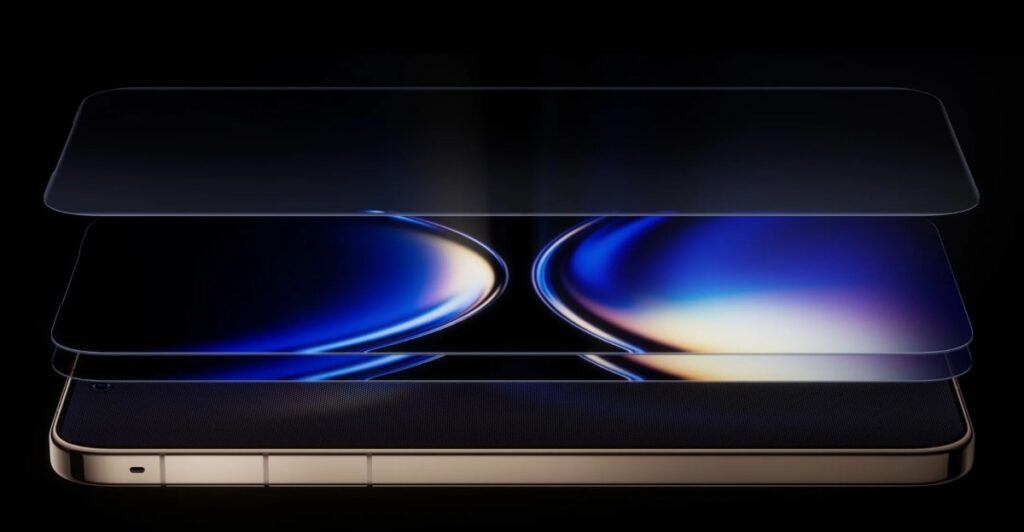
Huawei has launched its Mate 80 series in China, featuring four models, including the Mate 80 Pro Max, which is notable for its 6.9-inch dual-layer OLED display. The display boasts a peak brightness of 8,000 nits, surpassing the 7,000 nits of Realme’s GT 8 Pro and significantly exceeding the 3,300 nits claimed by Google’s Pixel 10 Pro. However, it is important to note that peak brightness figures relate only to specific screen sections in certain conditions and may not reflect everyday use. Despite this, the brightness is expected to outperform many other models, enhancing outdoor visibility.
All Mate 80 models now have flat screens and squared-off edges, a shift that aligns with a broader industry trend away from curved designs. The back of the phones features a prominent circular design that highlights wireless charging coils, complementing the round camera module and giving the appearance of the number eight.
The phones are powered by Huawei’s Kirin chipsets, with the Mate 80 RS Ultimate Design model offering up to 20GB of RAM. This model shares much with the Pro Max but includes additional design elements to justify its higher price. Notably, Huawei has not pursued a trend toward larger battery capacities, with the Pro Max featuring a 6,000mAh battery. The camera system remains a significant feature, especially with dual periscope lenses in the Pro Max and support for an add-on telephoto extender kit.
In addition to the Mate 80 series, Huawei introduced the Mate X7 foldable phone, designed to compete with the Galaxy Z Fold. The Mate X7 includes IP58 and IP59 ratings for dust and water resistance, enhanced battery capacity at 5,600mAh, larger screens, and upgrades to its chipsets and cameras. This launch not only emphasizes Huawei’s smartphone offerings but also includes a range of new products across various electronics, all currently available only in China, with potential limited international launches in the future.
Source: https://www.theverge.com/news/828543/huawei-mate-80-pro-max-dual-layer-oled-display-8000-nits