
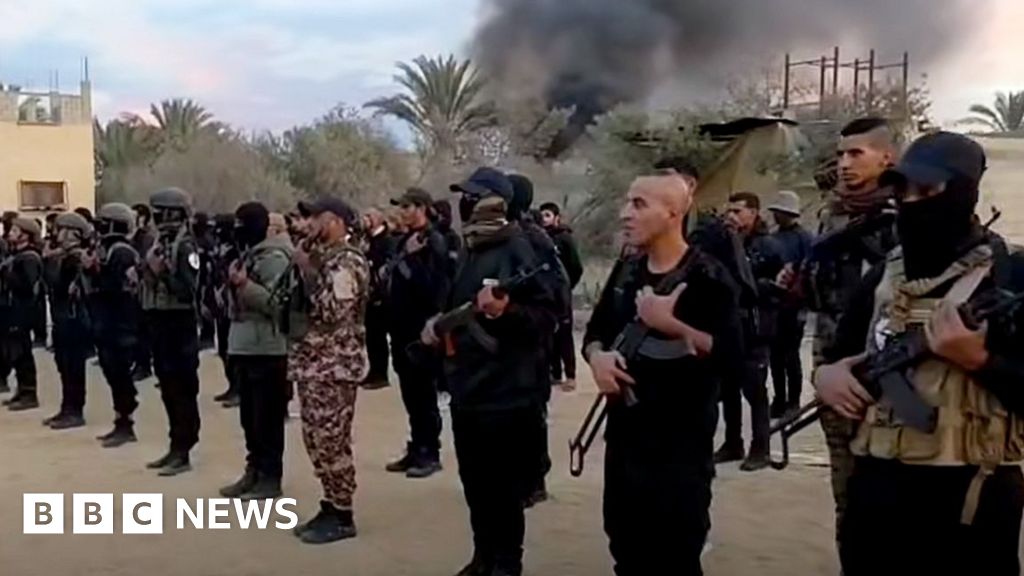
Questions are arising regarding the variety of armed groups that have surfaced in Gaza as they mobilize against Hamas in the recent months. These groups include those formed from family clans, criminal organizations, and newer militias, some of which reportedly have backing from Israel, as acknowledged by the Israeli Prime Minister.
The Palestinian Authority (PA), which governs parts of the West Bank and holds a political rivalry with Hamas, is believed to be covertly supporting some of these militias. However, these armed factions have not been officially incorporated into the U.S. administration’s peace plan for Gaza, which proposes an International Stabilisation Force and a newly-trained Palestinian police force for the region.
One of the most prominent militias is the Popular Forces, led by Yasser Abu Shabab, based near Rafah. In a recent video, Abu Shabab’s deputy discussed collaboration with the Board of Peace, the international entity tasked with managing Gaza under the proposed plan. Hossam al-Astal leads another group, named the Counter-Terrorism Strike Force, operating in Khan Younis. Al-Astal indicated that the U.S. had confirmed his group’s involvement in Gaza’s future policing structure, though a U.S. official stated that they had no announcements to make on the subject.
Many residents of Gaza express dissatisfaction with the power awarded to these fragmented armed groups, criticizing their alliance with Israel. Some citizens express a preference for cohesive governance rather than reliance on these emerging militias. Notably, a senior official from the PA stated there could be no blanket integration of these militia members into Gaza’s future police force, suggesting that Israel’s interests may not be aligned with those of the Palestinian people.
The fate of these new militias within Gaza’s political landscape remains uncertain, with some drawing historical parallels to previous foreign support leading to unintended consequences. Critics argue that this fragmented approach risks making negotiations for disarmament more complex, complicating future security and governance in Gaza.
Source: https://www.bbc.com/news/articles/cvgmgjx1jego?at_medium=RSS&at_campaign=rss