
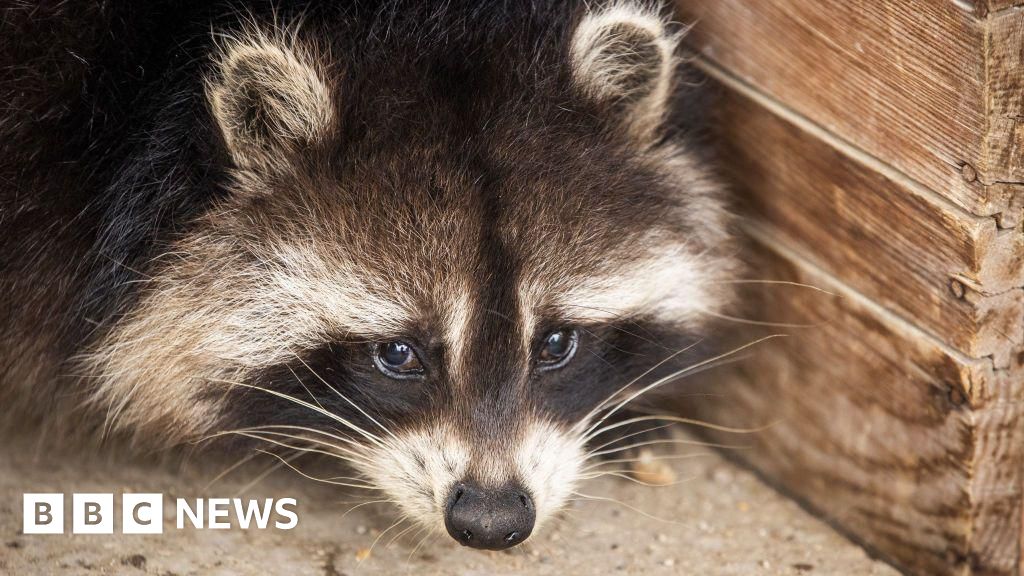
Raccoons are showing signs of adapting to urban life, leading to discussions about their potential as future pets. A recent study analyzed nearly 20,000 photographs and noted physical changes in urban raccoons, specifically a “clear reduction in snout length” compared to their rural counterparts. This change resembles the early stages of domestication seen in pets like cats and dogs.
Commonly found across the contiguous United States, raccoons are versatile creatures capable of thriving in both wild and urban environments. While they are considered cherished pets in some communities, others view them as nuisances. The study, published in the journal Frontiers in Zoology, suggests that their closeness to humans might indicate a decrease in their natural flight responses. This adaptation could be at a cellular level, softening their features and making them more comfortable around people.
The study’s co-author, Raffaela Lesch from the University of Arkansas at Little Rock, explained that raccoons’ access to trash—a significant resource in urban settings—plays a crucial role in their adaptation. She pointed out that “trash is really the kickstarter” for their urban domestication, as it provides a reliable food source. However, raccoons must navigate a balance between being bold enough to forage through human refuse while avoiding behaviors that could make them a threat.
The findings align with what is known as the “domestication syndrome phenotype,” which includes anatomical changes often associated with domesticated animals. Such traits, including reduced brain size and altered skull structure, are well-documented in dogs, which evolved from wolves. The authors of the study propose that the domestication process for animals like raccoons might begin when they become accustomed to human habitats, suggesting that natural selection, rather than human intervention, may be a key factor in this development.
Source: https://www.bbc.com/news/articles/c1j8j48e5z2o?at_medium=RSS&at_campaign=rss