
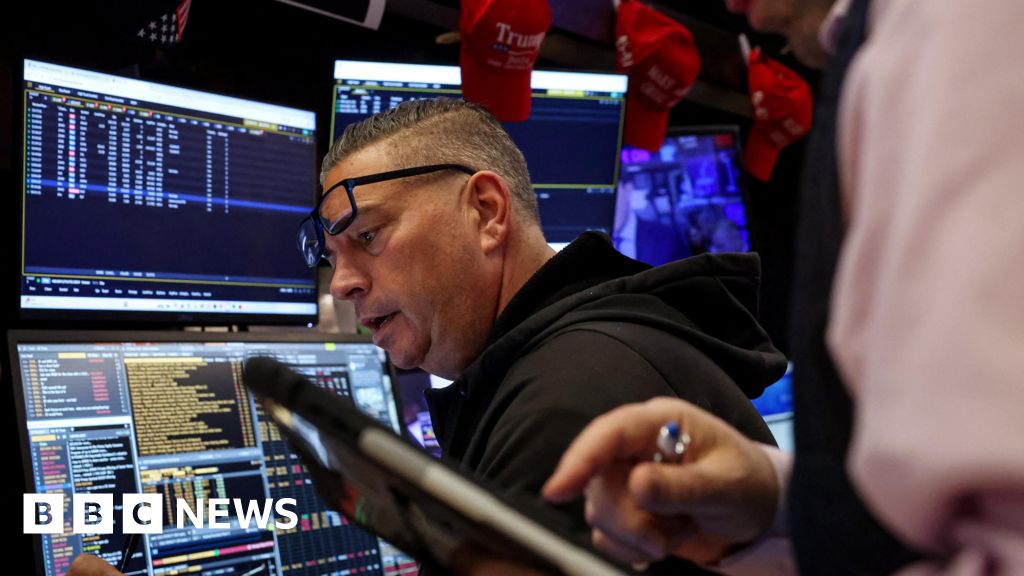
On Thursday, the three major U.S. stock indexes continued their decline after an initial rally, reflecting ongoing investor concerns despite recent positive business news. Strong performance from companies like Nvidia and Walmart, along with better-than-expected hiring figures and a rise in home sales, had been anticipated to stabilize the markets, which have faced setbacks in recent weeks.
The S&P 500 fell by 1.6%, the Dow Jones Industrial Average decreased by 0.8%, and the Nasdaq dropped over 2%. Notably, Nvidia saw its shares decline by more than 3% after an earlier surge. Analysts have questioned the market’s reaction, suggesting that investors are wary of underlying issues that may be affecting overall market sentiment.
The price of Bitcoin also dipped below $90,000, hitting its lowest point since April, partly due to concerns regarding inflated valuations in the AI sector. Despite Nvidia’s robust results, which momentarily boosted market confidence, fears of an AI bubble linger. Nvidia’s CEO, Jensen Huang, rejected the idea that AI companies are overvalued; however, many on Wall Street remain skeptical.
Additionally, uncertainty surrounding future interest rates is a concern for investors. Delayed inflation data from the recent U.S. government shutdown may impact the Federal Reserve’s subsequent monetary policy decisions. The S&P 500 index has decreased over 4% so far in November, potentially marking its worst month since March.
Amidst this uncertainty, the latest jobs report added to the ambiguity regarding rate cuts. While 119,000 jobs were added in September, exceeding many analysts’ expectations, the unemployment rate rose from 4.3% to 4.4%. This mixed data creates uncertainty ahead of the Federal Reserve’s next meeting in December. Analysts have indicated that sustained AI adoption and manageable interest rates are crucial for future market stability, as volatility could increase amid existing economic concerns.
Source: https://www.bbc.com/news/articles/cwy1yl1202yo?at_medium=RSS&at_campaign=rss