
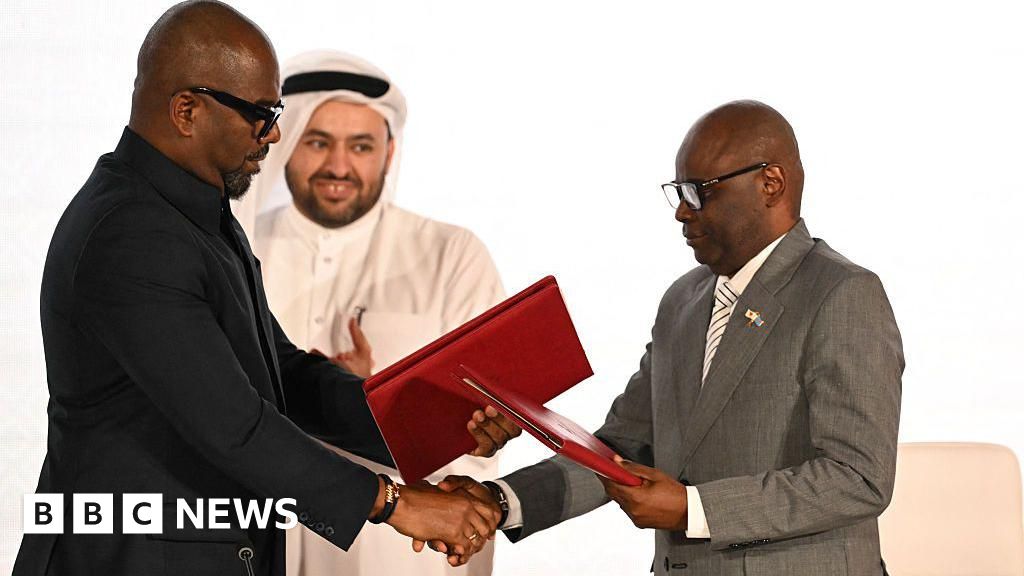
Rwandan-backed M23 rebels and the government of the Democratic Republic of Congo (DRC) have signed a peace framework aimed at addressing ongoing conflict in the eastern part of the country. The ceremony took place in Qatar, which, along with the United States and the African Union, has been mediating efforts to resolve decades-long disputes in this resource-rich region.
Earlier this year, M23 rebels gained control over key eastern cities such as Goma and Bukavu, marking a significant escalation in the conflict. The U.S. Africa envoy, Massad Boulos, indicated that the newly signed document includes eight protocols, most of which still require further development. Boulos also noted slow progress on prisoner exchanges and ceasefire monitoring.
The DRC’s capital, Kinshasa, is demanding the withdrawal of Rwandan troops from its territory, while Kigali states that this would occur only after the disbandment of the Congo-based FDLR rebel militia, which is primarily composed of ethnic Hutus with links to the 1994 Rwandan genocide.
The new framework also addresses key issues such as humanitarian access, the repatriation of displaced individuals, and the protection of the judiciary. This agreement builds upon a prior declaration of principles signed in Doha in July and a recent agreement concerning ceasefire monitoring.
Previous negotiations, including a peace deal brokered by Washington in June, faced challenges, with the agreement being quickly violated by the involved parties. The M23 clearly indicated its preference for the Qatar-mediated talks, which it believes will tackle the underlying causes of the conflict.
Since January, conflict has intensified, with thousands reported killed and hundreds of thousands displaced. The DRC government has sought U.S. assistance, potentially offering access to critical mineral resources in exchange for security guarantees, given eastern DRC’s wealth in coltan and other essential materials for the global electronics sector. Rwanda continues to deny allegations of support for M23, asserting that its military presence is purely defensive against threats such as the FDLR.
Source: https://www.bbc.com/news/articles/cwy7zlngwepo?at_medium=RSS&at_campaign=rss