
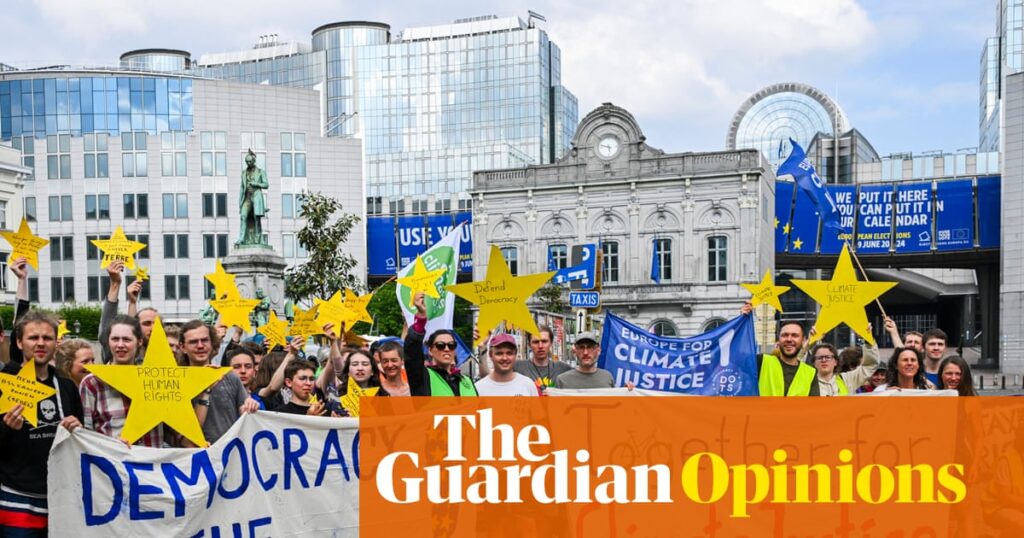
Climate action has traditionally been a key policy focus for Europe. As negotiators meet in Brazil for COP30, Europe’s ability to lead on this issue is facing challenges. This contrasts sharply with the situation a decade ago in Paris during COP21, where a significant agreement aimed at limiting global warming to 1.5°C was reached, through cooperation between the US and China alongside a coalition of global south countries.
The Paris Agreement laid the groundwork for the European Green Deal in 2019, which set the EU’s goal of achieving climate neutrality by 2050. This plan included various regulatory and funding measures to support the transition. However, the social implications of this transformation were not fully considered, impacting regions and workers dependent on carbon-heavy industries, as well as disadvantaged groups.
At COP30 in Brazil, Europe’s position is precarious. This is attributed in part to the US withdrawing from the Paris Agreement and actively undermining global climate commitments, along with growing resistance from countries in the global south that prioritize economic growth over climate objectives. Additionally, internal pressures in Europe, influenced by far-right groups and fossil fuel lobbies, have complicated the climate agenda.
Since the COVID-19 pandemic and geopolitical tensions, public opinion regarding the Green Deal has shifted, with some viewing it as a method to weaken European industries. Various legislative initiatives aimed at sustainability have been postponed or diluted, raising questions about Europe’s commitment to its climate goals. For example, the expansion of the EU’s emissions trading scheme and the regulation on deforestation have encountered delays.
Despite these setbacks, Europe still leads in climate finance and possesses the potential to enhance its global influence. The challenge lies in reconciling internal political pressures with the broader imperative of climate action, as well as rebuilding relationships with the global south to strengthen climate collaboration.
Source: https://www.theguardian.com/commentisfree/2025/nov/14/global-leader-climate-action-eu-right-green-bashing