
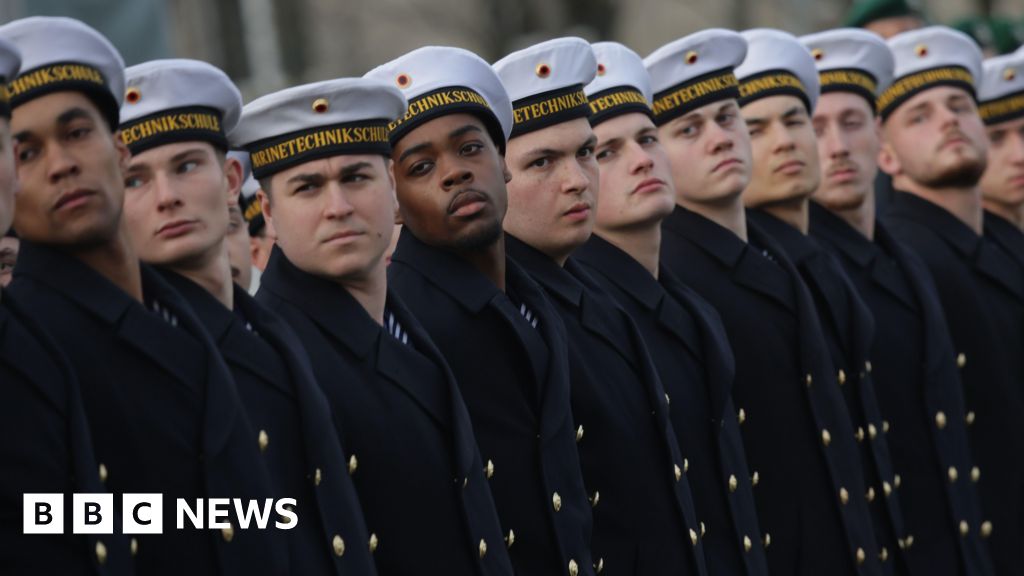
Germany’s coalition government has reached an agreement on a new military service plan aimed at increasing troop numbers. The initiative will require all 18-year-old men to complete a questionnaire assessing their suitability for military service and will introduce mandatory medical screenings starting in 2027.
This decision aligns with Germany’s objective of establishing the most formidable conventional army in Europe. Armin Papperger, CEO of Rheinmetall, the country’s largest defense company, has indicated that achieving this goal may be possible within five years. He noted that recent government decisions are providing clarity regarding military objectives.
In earlier remarks, General Carsten Breuer, the head of the German armed forces, cautioned about the need for the Western NATO alliance to prepare for a potential threat from Russia within the next four years. Papperger agreed that Germany must be prepared by 2029, although he acknowledged uncertainty about future circumstances.
When the coalition was formed earlier this year, the conservative CDU/CSU and the center-left SPD parties decided to reintroduce military service, which will initially be voluntary. The Bundeswehr, Germany’s armed forces, currently comprises approximately 182,000 troops. The new military model aims to increase this number by 20,000 in the coming year, eventually rising to 255,000-260,000 within a decade, supported by around 200,000 reservists.
Starting next year, 18-year-old men and women will receive a questionnaire regarding their interest in military service; it will be compulsory for men and voluntary for women. By July 2027, all men in this age group will also be required to take a medical exam to evaluate their fitness for duty. If the government’s recruitment targets are not met, legislation for compulsory enlistment may be considered.
The proposal has encountered opposition, particularly among younger Germans, with a recent survey indicating significant resistance to mandatory service in this demographic. Meanwhile, some individuals, like 21-year-old Jason, have chosen to enlist due to current security concerns, expressing a desire to contribute to national defense.
Defense Minister Boris Pistorius has attempted to reassure the public about the new military service plan, emphasizing that a stronger military capability would ultimately reduce the likelihood of conflict. He noted that defense spending in Germany had declined after the Cold War and that conscription was suspended in 2011. The recent developments follow a broader trend of increasing military readiness in response to security developments in Europe.
Source: https://www.bbc.com/news/articles/c4gpkerdn9qo?at_medium=RSS&at_campaign=rss