
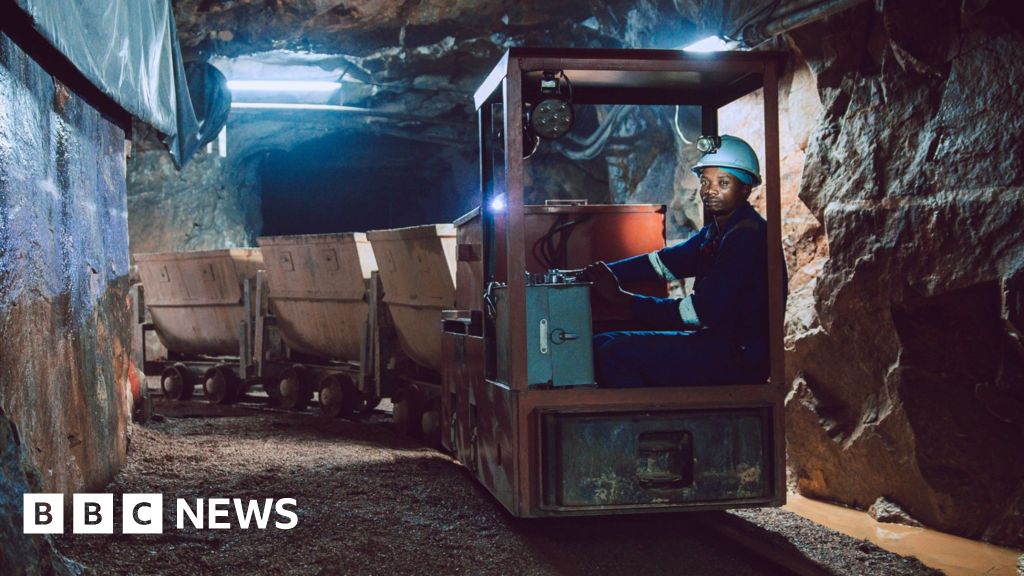
The competition for critical minerals essential for modern technology is intensifying between China and the United States, with African nations playing a crucial role due to their rich mineral resources, including lithium, cobalt, rare earths, and tungsten. These materials are vital for manufacturing electronics, electric vehicles, and various industrial applications.
Historically, China has maintained a dominant position in the global minerals market, both in terms of raw material reserves and processing capabilities. Recent developments indicate that the U.S. has overtaken China as the leading foreign direct investor in Africa, with U.S. investments reaching $7.8 billion in 2023 compared to China’s $4 billion. This marks the first time since 2012 that the U.S. has held this position.
The U.S. International Development Finance Corporation (DFC), established in 2019, is particularly focused on countering China’s influence in strategic regions, including Africa. Rwandan mining company Trinity Metals recently received a $3.9 million grant from the DFC to develop its mines for tin, tantalum, and tungsten. The company is now exporting tungsten and tin to processing facilities in Pennsylvania, although its chairman asserts that this direction is a commercial decision, not influenced by U.S. funding.
Economist Sepo Haimambo from FNB Namibia emphasizes the importance of African nations being proactive in negotiations with foreign investors, advocating for frameworks that go beyond simple cash-for-minerals deals. She suggests exploring joint ventures and local equity participation to create sovereign wealth funds that could invest in vital sectors like education and healthcare.
U.S. company ReElement Africa is also working on building a critical minerals refinery in South Africa, aiming to enhance local economic capabilities. However, concerns persist regarding previous U.S. trade policies that may have hindered relationships with African nations, particularly under past tariffs. Analysts note that new competitors, such as Brazil and India, are also showing increased interest in African resources, potentially complicating the landscape for U.S.-China rivalry in the continent.
Source: https://www.bbc.com/news/articles/cx2yl88wd3lo?at_medium=RSS&at_campaign=rss