
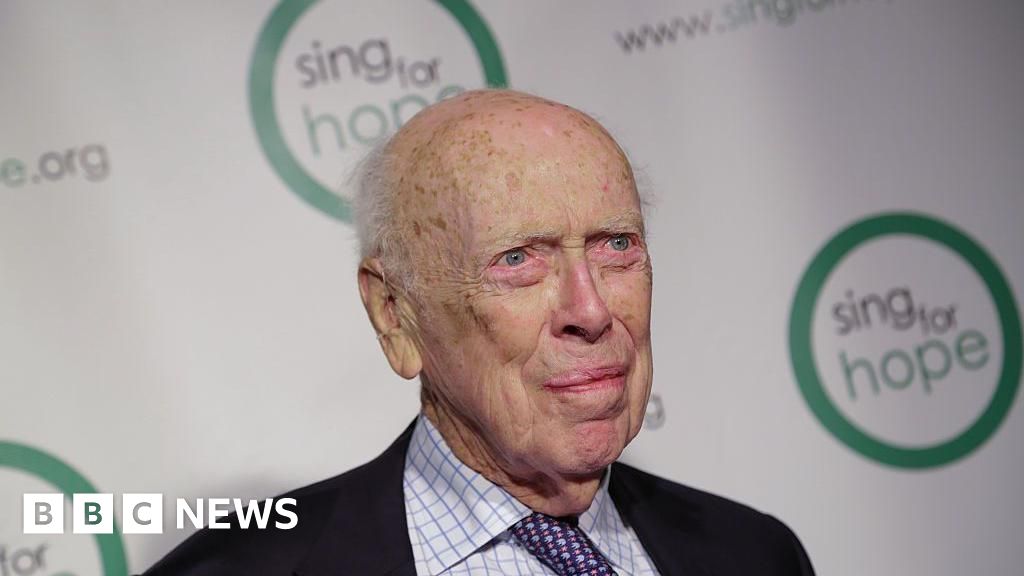
James Watson, the American scientist known for his role in discovering the double helix structure of DNA, has passed away at the age of 97. His groundbreaking work, conducted in 1953 alongside Francis Crick and Maurice Wilkins, significantly advanced the understanding of how DNA replicates and conveys genetic information.
Watson’s contributions to molecular biology earned him the Nobel Prize in Physiology or Medicine in 1962. However, his career was marred by controversies surrounding his views on race and intelligence. In 2019, Watson was stripped of his honorary titles from Cold Spring Harbor Laboratory after he made controversial remarks regarding differences in IQ between racial groups. His statements were condemned by the laboratory as “reprehensible” and not supported by scientific evidence.
Watson was confirmed to have died by Cold Spring Harbor Laboratory, where he spent much of his professional life. He was known for expressing feelings of ostracism from the scientific community following his controversial remarks. In an interview in 2007, he articulated his pessimistic views about intelligence levels in Africa, which further fueled his reputation as a controversial figure.
Despite his successes, Watson’s actions led to him losing various positions, including his role as chancellor at Cold Spring Harbor Laboratory. He also sold his Nobel Prize medal at auction in 2014 for $4.8 million, stating the decision was influenced by his treatment by the scientific community.
Born in Chicago in 1928, Watson demonstrated early academic promise, earning a scholarship to study at the University of Chicago at 15. He later pursued research in the United Kingdom, where he met Crick and began working on DNA structure. His legacy, while marked by significant scientific achievements, is also complicated by his public comments and their impact on his career within the scientific community.
Source: https://www.bbc.com/news/articles/cn8xdypnz32o?at_medium=RSS&at_campaign=rss