
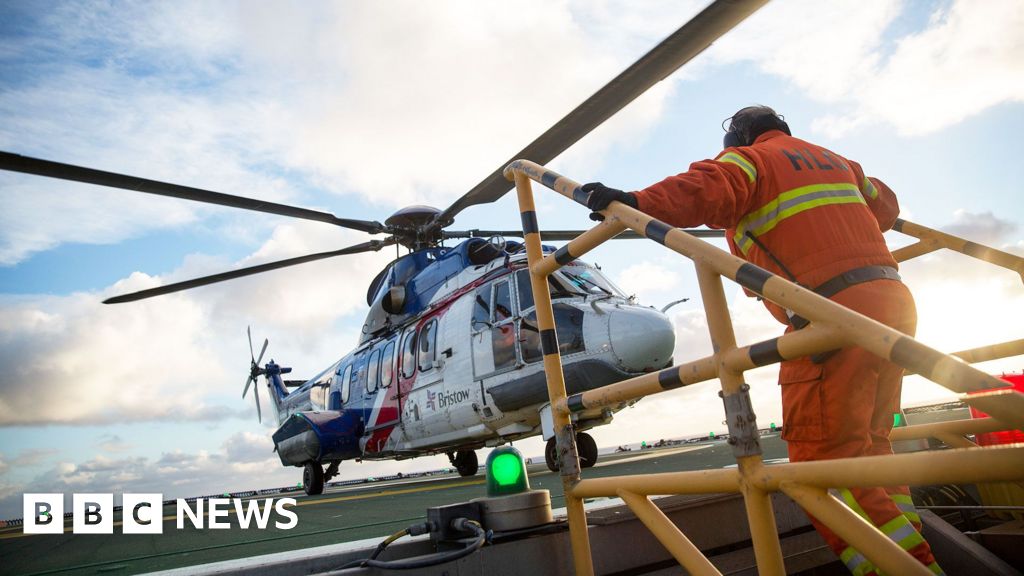
Thousands of oil workers in the North Sea face a requirement to lose weight to maintain their offshore flying status, as new regulations set to take effect in November next year are established by Offshore Energies UK (OEUK). The body’s guidelines state that workers must adhere to a maximum clothed weight of 124.7 kg (19.5 stone) to ensure successful rescue operations in emergencies.
This weight limit aligns with the Coastguard rescue helicopter’s winch load capacity of 249 kg (39 stone), which includes the average weight of a rescue worker and essential equipment. Currently, more than 2,200 workers exceed this limit, raising concerns about potential job losses should they fail to adjust their weight.
Phil Perry, an offshore worker from Aberdeen, shared his efforts to lose weight in light of the new policy, expressing concern for colleagues who might be adversely affected. He noted that while he has lost weight from 129 kg (20 stone) to 118 kg (18.5 stone), the prospect of job loss adds pressure to maintain this progress.
The implementation of the safe weight limit policy follows a review over two and a half years, prompted by warnings from the Maritime and Coastguard Agency about the limitations of rescue winches in heavy lifting scenarios. OEUK also indicated that the average weight of offshore workers has risen nearly 10 kg (1.5 stone) since 2008.
Graham Skinner, the health and safety manager at OEUK, acknowledged the potential for job losses but expressed hope that employers would support their workers through the adjustment period. He emphasized that the message regarding the new rules must reach the workforce to motivate compliance.
While concerns remain, community support initiatives, such as fitness training sessions by offshore workers, could provide collaborative motivation for those needing to meet the weight requirements before the November 2024 deadline.
Source: https://www.bbc.com/news/articles/cx274xp00zxo?at_medium=RSS&at_campaign=rss