
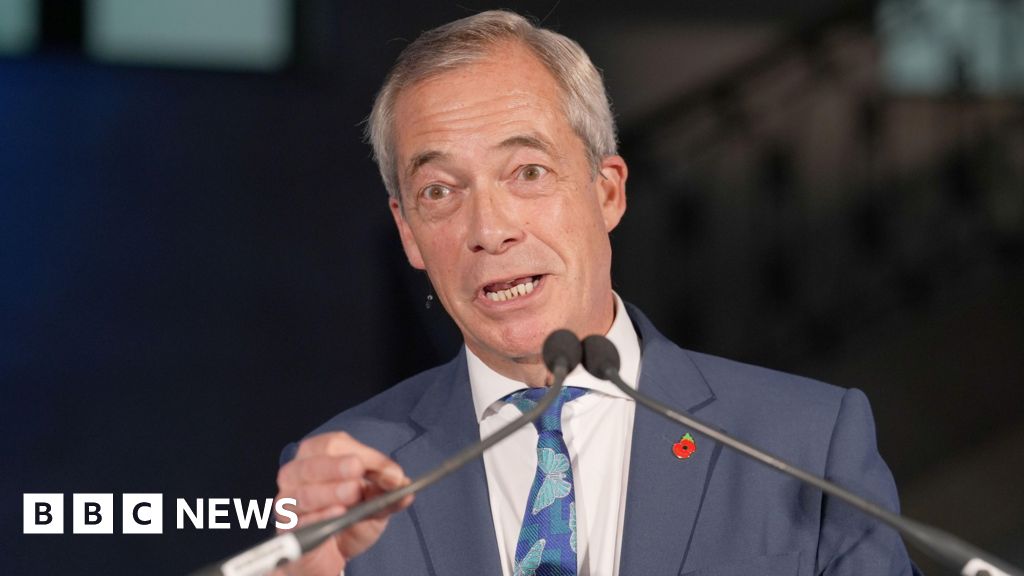
Reform UK leader Nigel Farage has adjusted his party’s previous commitment to implement annual tax cuts of £90 billion. This shift follows promises made before last year’s general election, which included reducing corporation tax, lowering stamp duty on home purchases, and increasing the income tax threshold.
Farage remarked that “substantial tax cuts” are currently considered “not realistic” due to the challenging state of public finances. He indicated that while Reform UK aims to make some “relatively modest” changes, such as raising tax thresholds and abolishing inheritance tax for family farms and family-run businesses, significant reductions are off the table for the time being.
In addition to tax modifications, Reform’s manifesto included a commitment to cut government spending by approximately £50 billion annually. However, these pledges have faced skepticism from economists, particularly from the Institute for Fiscal Studies, which argued that expected savings would be lower than projected and that tax cuts would incur higher costs. The party’s plans have also been met with criticism from Labour and Conservative representatives, who accuse Farage of proposing unfunded spending initiatives.
During a recent speech outlining Reform UK’s economic vision, Farage countered critiques about his party’s credibility, asserting that both Labour and Conservatives have failed to effectively manage public spending, leading to an increase in national debt. He acknowledged that the economic situation is currently more dire than it was prior to the last election and that substantial tax cuts are contingent upon addressing public financial management.
Farage reiterated the party’s aspiration to increase the income tax threshold to £20,000, emphasizing the importance of incentivizing work. Nonetheless, he warned that the economy might deteriorate further by the next general election. He also promised to reduce energy bills and enhance government advisory roles by appointing individuals with real business experience.
Labour minister Lisa Nandy and Conservative shadow chancellor Mel Stride have expressed doubts about the financial viability of Reform’s plans, suggesting inconsistencies in Farage’s commitments.
Source: https://www.bbc.com/news/articles/c4gw941pp4ko?at_medium=RSS&at_campaign=rss