
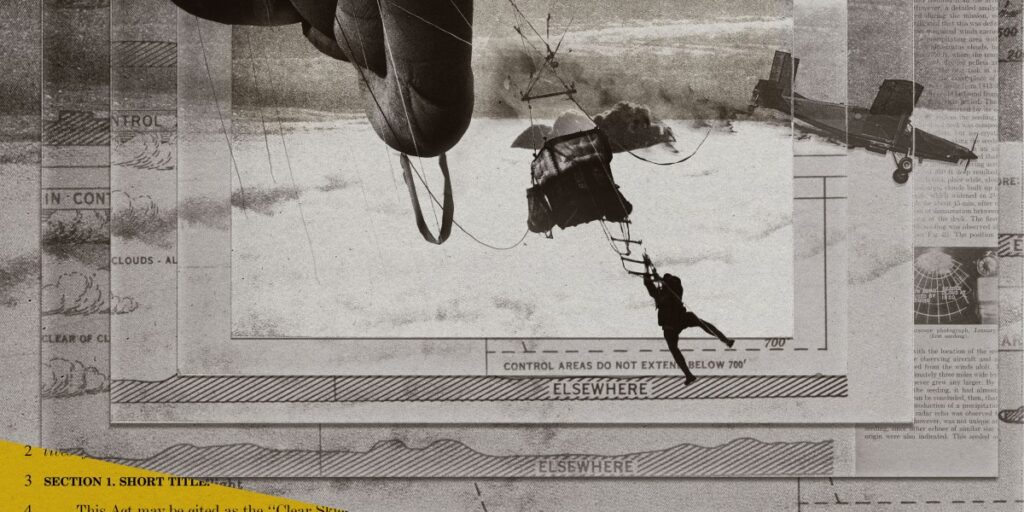
Overview of Weather Modification Efforts
Attempts to significantly alter weather patterns, such as hurricanes or extended periods of clear skies, have yet to yield successful results. The U.S. government’s initial effort in this area dates back to 1947 with Project Cirrus, where scientists collaborated with General Electric to seed clouds with dry ice in hopes of inducing ice crystal formation. However, after the storm unexpectedly changed direction and impacted Savannah, Georgia, some claimed the modification efforts were responsible. Experts later clarified that such directional changes in storms can occur naturally, leading to public concern and scrutiny.
Subsequent attempts included Project Stormfury, aimed at weakening hurricanes, and Operation Popeye, which sought to increase monsoon rains in Vietnam during the 1960s and 70s. The effectiveness of these initiatives remains unclear, and the Nixon administration faced criticism for its lack of transparency regarding these operations.
In more recent endeavors, a Florida company experimented with Dyn-O-Gel, a super-absorbent powder intended to reduce moisture in storm clouds. However, significant quantities of the substance would be required, highlighting the logistical challenges inherent in weather modification.
Other research projects have explored methods for weather modification, such as the use of powerful lasers for cloud formation in Switzerland and attempts to create artificial clouds over the Great Barrier Reef to combat climate change. Despite these explorations, none have come close to the level of control suggested by some conspiracy theories.
Additionally, discussions around weather modification often conflate legitimate research with concepts like chemtrails and solar geoengineering. The latter, particularly stratospheric aerosol injection, involves introducing particles to the stratosphere to reflect sunlight and reduce global warming. However, large-scale implementation remains theoretical and has faced considerable opposition.
In summary, while there have been numerous attempts at weather modification, success has been limited, and current technologies are far from meeting the dramatic claims often associated with this field.
Source: https://www.technologyreview.com/2025/10/30/1126467/weather-control-conspiracy-theory-cloud-seeding-floods/