
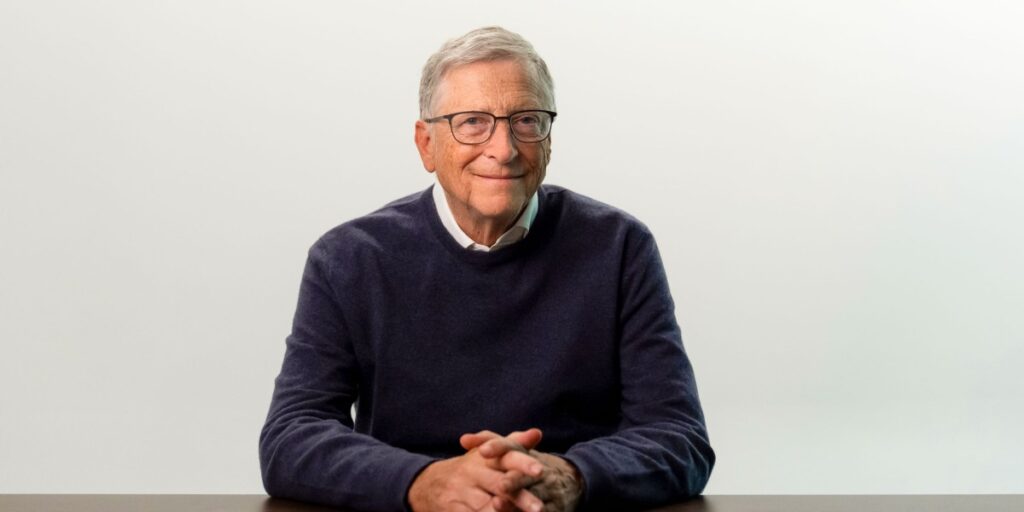
Bill Gates reported that he invests around $9 million annually in carbon offsets to mitigate his personal emissions. However, he expressed skepticism about the effectiveness of many current offset technologies in making a substantial impact on climate change. He noted that carbon sequestration costs are often too high, stating that options costing $400, $200, or even $100 will not significantly contribute to climate solutions. Gates mentioned that if a technology could reduce costs to $4, it would be highly beneficial, but he has yet to see such advancements. He acknowledged that some technologies may lower costs to between $40 and $50, which could be helpful.
During the discussion, Gates frequently mentioned artificial intelligence (AI), highlighting its potential to enhance innovation across various fields, including healthcare and material science. He pointed out that AI is likely to increase electricity demand, similar to trends seen with electric vehicles and heat pumps. Despite acknowledging the challenges this may pose for the U.S. electrical grid, Gates expressed optimism for AI’s role in accelerating innovation. He claimed that AI could serve as a significant agent of change, enabling energy companies to advance their breakthroughs more rapidly.
While Gates emphasized the potential of AI to impact innovation positively, questions remain regarding its overall effectiveness across multiple industries, including climate technology. The broader implications of AI in addressing climate challenges continue to be a topic of discussion and inquiry.
Source: https://www.technologyreview.com/2025/10/30/1127056/four-thoughts-from-bill-gates-on-climate-tech/