
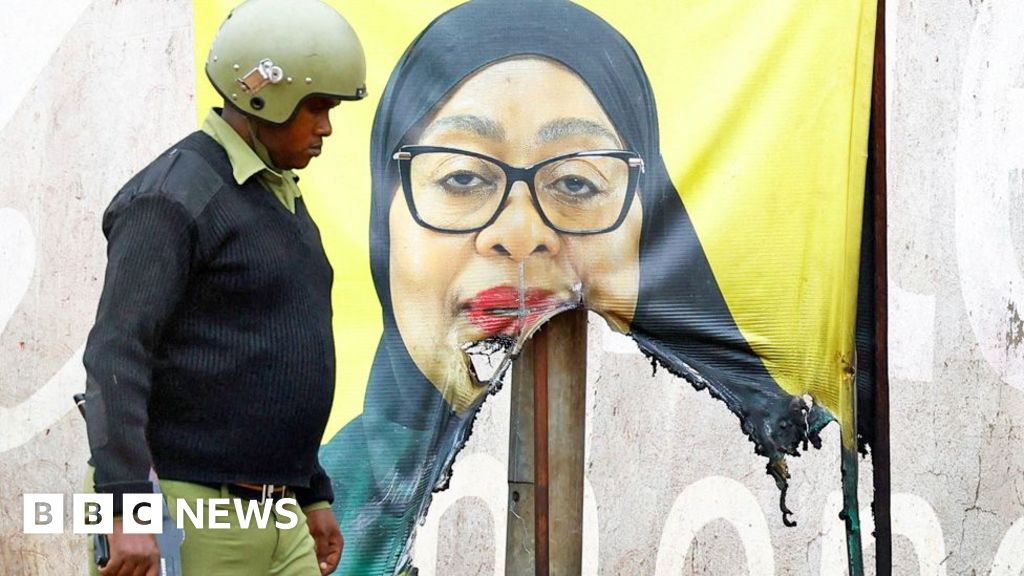
Tanzania is experiencing significant unrest following the recent general election, which took place on Wednesday. The main opposition party, Chadema, has reported that “around 700” individuals may have died during three days of protests. A diplomatic source has indicated that credible evidence suggests at least 500 fatalities have occurred, but the ongoing internet shutdown complicates verification of these figures.
Protests have erupted in major cities, including Dar es Salaam, where demonstrators are challenging the election results, asserting that the vote was unfair due to the exclusion of key opposition figures from candidacy against President Samia Suluhu Hassan. Despite warnings from military officials to quell the unrest, protests have persisted in several neighborhoods of Dar es Salaam.
General Jacob John Mkunda stated that the military has managed to control the situation, emphasizing that those involved in the unrest are criminals. The government has responded by extending curfews in an effort to restore order and has attempted to downplay the scale of the violence. Information from hospitals regarding casualties has been limited, with reports indicating that morgues are nearing capacity.
International responses include a call for restraint from the UN, which has reported multiple deaths and injuries associated with the protests. Various foreign diplomats have urged the Tanzanian government to exercise caution in its handling of the situation.
As of Friday afternoon, election results from approximately 80 out of 100 regions have been announced, with low voter turnout reported by international observers. The ruling party, Chama Cha Mapinduzi (CCM), is expected to maintain its dominance, having governed since the country’s independence in 1961.
In Zanzibar, the incumbent president from CCM received nearly 80% of the vote, although opposition claims have surfaced regarding electoral fraud. Additionally, protests and the internet shutdown have resulted in logistical issues for tourists stranded at the airport.
The opposition leader, Tundu Lissu, remains imprisoned on treason charges, while another prominent opponent was excluded from the election due to legal challenges. Sixteen minor parties have been approved to participate in the elections, but they traditionally lack significant public support.
Source: https://www.bbc.com/news/articles/cz0x8vdvkjgo?at_medium=RSS&at_campaign=rss