
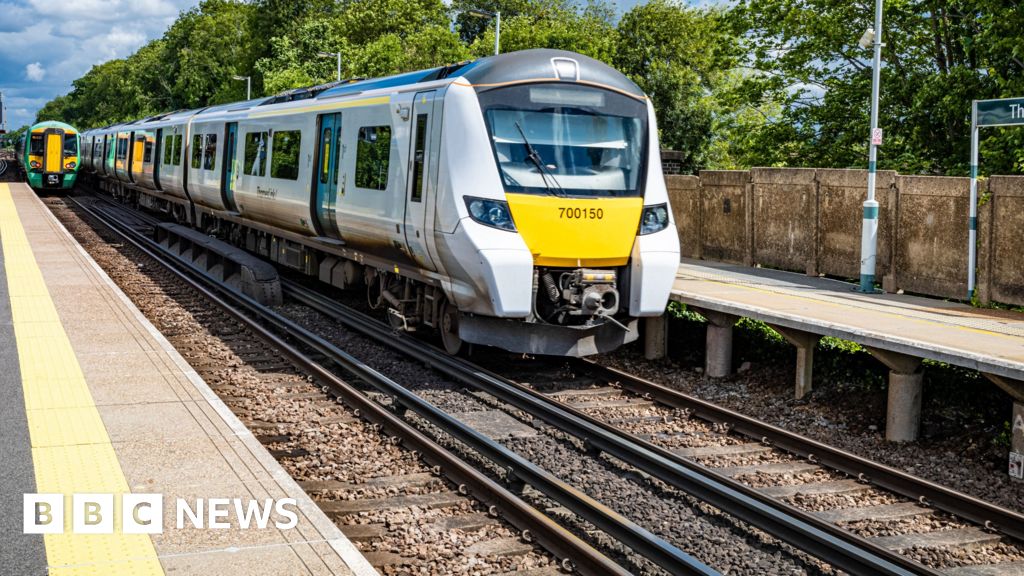
Aldershot station in the UK is home to a solar panel installation that powers local trains, highlighting an innovative approach to railway electrification. The 40-kilowatt solar array, developed by Richard Sunbeams, connects to the railway, allowing trains to draw energy from renewable sources. This installation is noted as the only solar array in the UK supplying energy directly for train operations.
Most trains globally still rely on diesel, as transitioning to electric power through traditional methods can be costly and complex. Concerns about electricity grid connections present additional barriers. Riding Sunbeams’ CEO, Leo Murray, emphasizes the potential of solar panels in facilitating railway electrification, despite earlier funding challenges. Network Rail, which manages the UK’s railway infrastructure, is currently seeking suppliers for rail-side renewable projects, which may provide new opportunities for Riding Sunbeams.
Electrification methods are evolving. For example, while the Aldershot installation benefits from an existing electrification framework, new systems that primarily utilize overhead lines must adapt to the fact that solar panels generate direct current (DC), while overhead systems typically use alternating current (AC). Engineers in England are working on converter devices to address these issues. Additionally, software developed at the University of Huddersfield is aiding in efficient electrification planning for rapid rail junctions.
Globally, other innovations are emerging, like Poland’s Nevomo, which focuses on electromagnetic propulsion for freight transport, seeking to eliminate the need for traditional locomotives. In the US, Parallel Systems is developing battery-powered freight wagons, emphasizing a more flexible rail delivery service that could compete with trucking.
With new technologies, the feasibility of electrified trains continues to increase, although the challenge remains in proving the business case for widespread implementation.
Source: https://www.bbc.com/news/articles/czdjg92y00no?at_medium=RSS&at_campaign=rss