
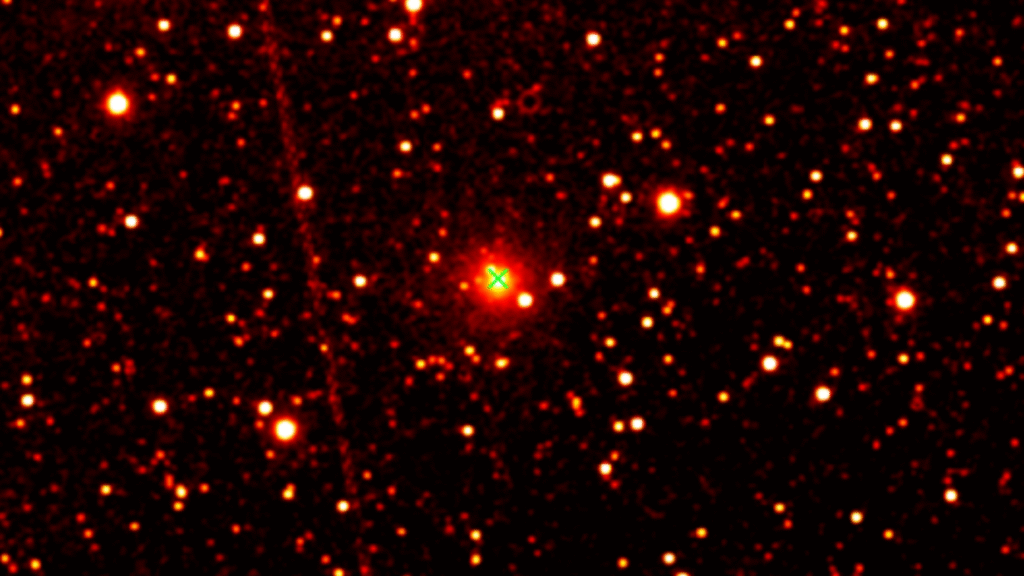
Recently, a viral time-lapse video circulated on X (formerly Twitter) and Instagram, claiming to display the interstellar object 3I/ATLAS moving through space. This claim has been debunked by fact-checkers, who identified the footage as a microscope sequence of a paramecium, a single-celled organism found in freshwater environments. The initial video garnered significant attention, accumulating thousands of views before verification proved it false.
Astronomers confirmed that 3I/ATLAS was first detected on July 1 by the Asteroid Terrestrial-impact Last Alert System (ATLAS) telescope in Chile. Observations from the James Webb Space Telescope indicated that the object has a unique carbon dioxide to water ratio, unlike any other comet studied before. Additionally, studies show that 3I/ATLAS has comet-like features, including a coma and a dust tail, and may be up to 10 billion years old.
This incident highlights challenges in the dissemination of scientific information through social media, where visual appeal can overshadow factual accuracy. Experts urge individuals to verify sources and ensure that scientific imagery comes from credible institutions.
- Why it matters: This incident underscores the importance of source verification in scientific communication, especially on social media, where misinformation can spread rapidly.
- It also highlights the distinction between scientific imagery and misleading representations, which can impact public understanding of scientific phenomena.
- The latest: Further analysis of 3I/ATLAS confirms that it is of natural origin, countering theories suggesting it might be alien technology.
Source: https://www.ibtimes.co.uk/viral-3i-atlas-video-not-spaceits-microscopic-paramecium-1751214
Source: https://www.ibtimes.co.uk/viral-3i-atlas-video-not-spaceits-microscopic-paramecium-1751214