
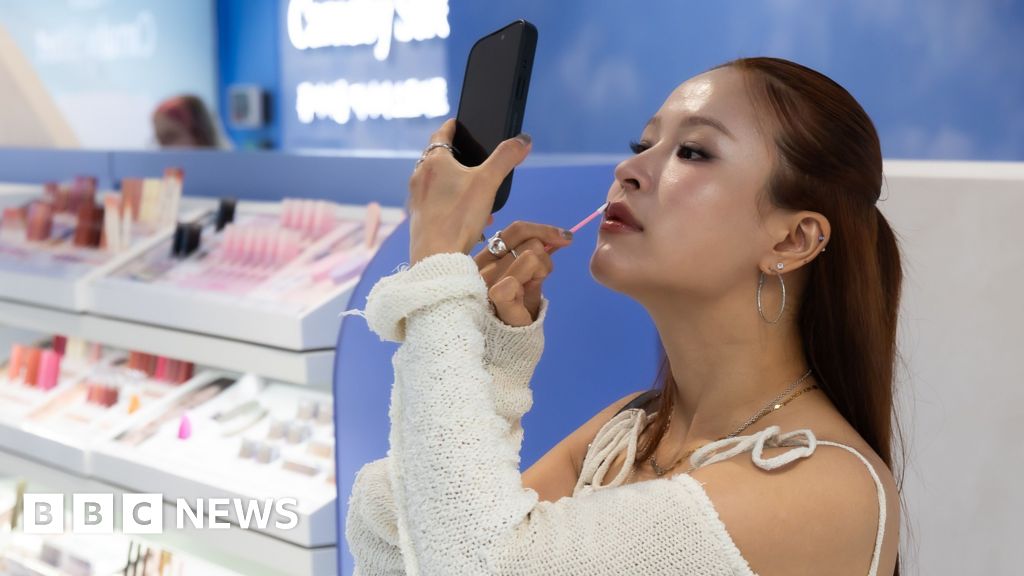
Korean skincare, commonly referred to as “K-beauty,” has gained significant global popularity, with South Korean exports totaling $10.3 billion (£7.7 billion) last year. This rise in K-beauty has prompted non-Korean cosmetic companies to launch their own product lines claiming K-beauty influences. The question arises: does this dilution of the term K-beauty matter?
K-beauty gained traction internationally in the 2010s alongside other Korean cultural exports, like K-pop and K-drama. The typical K-beauty skincare routine involves multiple steps—often as many as 10—each utilizing different products. Annual exports surged from $650 million in 2011 to $4 billion in 2017, indicating a growing interest in these products.
In response to this growing market, Seoul Ceuticals was established in 2017. The U.S.-based brand offers skincare while sourcing its ingredients from Korea, but it is not a Korean company. Its director, Ann Majeski, explains that while they manufacture in the U.S., they claim to provide “real, authentic Korean skincare.” However, there are varying opinions on what qualifies as K-beauty.
Seung Gu Kim, co-founder of K-beauty firm Hwarangpoom, believes that production should primarily occur in Korea, with concepts developed from a Korean perspective. He acknowledges that the definition of K-beauty remains complex and vague, as various brands made by Koreans living abroad also enter the market.
There is currently no official definition or protected designation for K-beauty, unlike products such as Champagne. The K-beauty Industry Association emphasizes promoting the sector rather than imposing strict regulations. They state that member companies must be registered in South Korea and have products approved by the Korea Food & Drug Administration.
Despite the thriving sector, a high counterfeit rate poses challenges. A recent study found that 90% of tested K-beauty products in the U.S. marketplace were counterfeit, leading to frustrations among consumers. In response, Gracie Tulio launched PureSeoul in 2019 to sell authentic K-beauty products sourced directly from Korean manufacturers, addressing consumer concerns about counterfeit goods.
Source: https://www.bbc.com/news/articles/cwykqrlwwxqo?at_medium=RSS&at_campaign=rss