
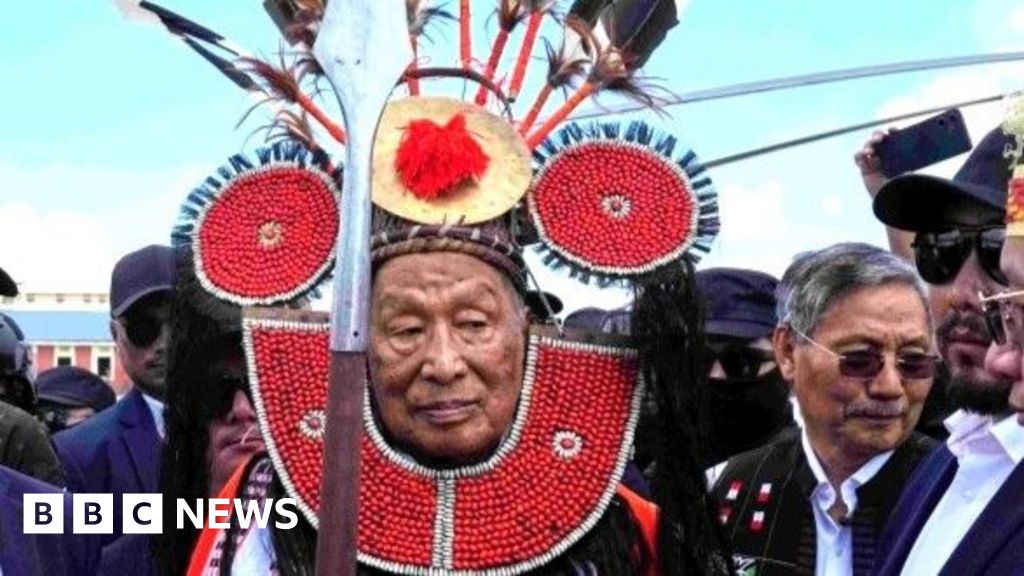
Thuingaleng Muivah, a significant figure in Naga politics, returned to his home village of Somdal in Manipur last week after more than 60 years. At the age of 91, he is a prominent leader of the National Socialist Council of Nagalim (Isak-Muivah) (NSCN-I-M), an insurgent group that once played a vital role in the Naga struggle for sovereignty. His arrival was met by a large crowd, who welcomed him with traditional shawls.
Muivah first left his village in 1964 to join the Naga movement, which has roots extending back to before India’s independence in 1947. Initially, he became involved with the Naga National Council, the first organization demanding independence. He later co-founded the NSCN in 1980, which has navigated various ceasefires and conflicts over the decades.
During his long career, Muivah has been both a guerrilla leader and a political negotiator. His organization has faced accusations of extortion and violence, which Muivah has denied. While he has maintained calls for a separate Naga flag and constitution, these demands have strained relations with the Indian government, which has offered limited autonomy.
In recent years, the influence of the NSCN-I-M has diminished, and a younger generation is leaning toward peace and economic stability rather than continued conflict. Muivah’s health has also declined, raising questions about the future direction of the Naga movement and its leadership.
Despite these challenges, the display of Naga flags during Muivah’s return suggests a continued commitment to Naga identity and aspirations. Critics question his effectiveness, claiming that his efforts have failed to yield substantial results. On the other hand, supporters argue that he is exhausted from a protracted struggle, still holding out hope for a political settlement that has eluded the Naga people for decades.
Source: https://www.bbc.com/news/articles/cvgmp428plvo?at_medium=RSS&at_campaign=rss