
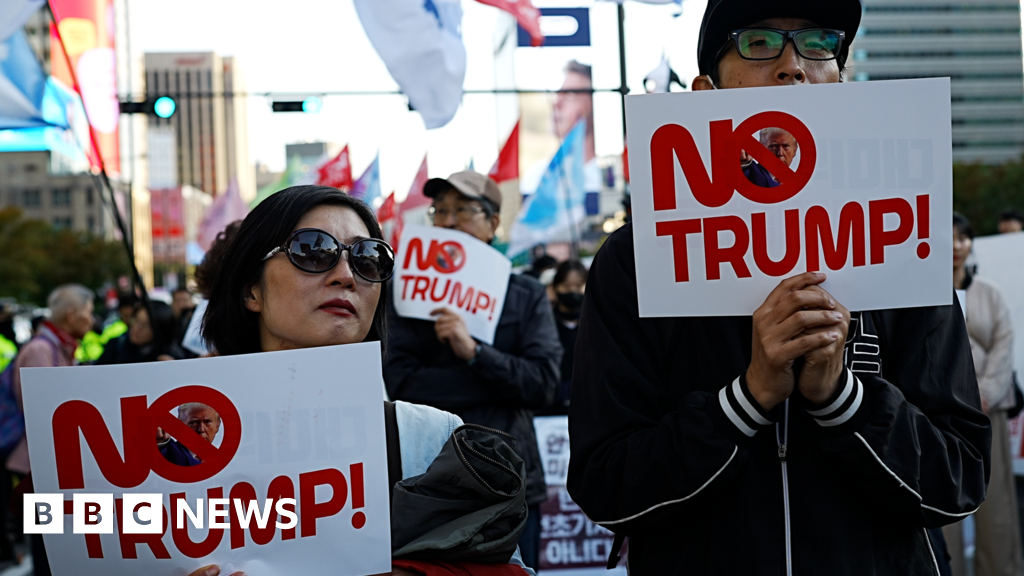
Protests occurred in Seoul ahead of the arrival of U.S. President Donald Trump, with attendees chanting “No Trump!” as they approached the U.S. embassy. Although police buses prevented them from reaching the gates, a stage and loudspeaker enabled their voices to be heard across Gwanghwamun Square. Nearby, others demonstrated with banners reading “No China” as South Korea’s President Lee Jae Myung prepares for a week of diplomacy hosting both Trump and Chinese President Xi Jinping.
Historically, South Korea has been a key ally of the U.S., forged during the Korean War. However, President Lee faces the challenge of balancing relations with both the U.S. and China, the latter being South Korea’s largest trading partner. Experts note that South Korea’s positioning amid the influence of both superpowers poses significant diplomatic challenges.
Lee’s predecessor faced political turmoil, which affects Lee’s approach as he seeks improvement in relations, especially after recent immigration raids in the U.S. involving South Korean nationals. While the public views the U.S. favorably, recent events have strained perceptions, raising questions about the real state of bilateral relations.
Economic considerations are also at play as Trump demands increased investments from South Korea during trade negotiations. Observers suggest that a brief visit from Trump might be better for Lee than prolonged negotiations, especially given the complexities involved.
The protests reflect growing discontent among some South Koreans regarding perceived economic imbalances in the U.S.-South Korea relationship. Recent sentiment against China has also been rising, with some rally participants expressing concerns over Chinese influence in South Korea. This trend intensified after an advanced missile defense system was deployed in the country, prompting economic retaliation from Beijing.
As Xi arrives to meet Lee for the first time in over a decade, the diplomatic landscape remains tense. The outcomes of these high-stakes meetings will likely influence South Korea’s future trajectory in managing its alliances with both the U.S. and China.
Source: https://www.bbc.com/news/articles/cy7eyg0808xo?at_medium=RSS&at_campaign=rss