
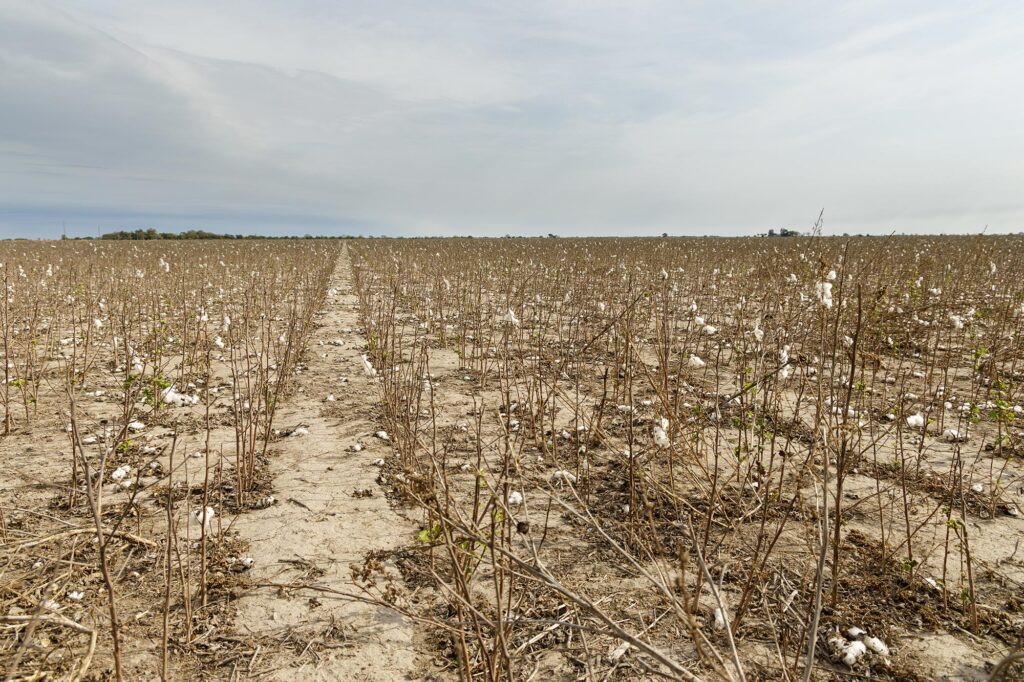
Recent research has identified the cotton leafroll dwarf virus (CLRDV) as a longstanding threat to cotton crops in the southern United States, with evidence of its presence dating back to 2006. A study published in Plant Disease by researchers from the USDA Agricultural Research Service and Cornell University revealed that CLRDV was not a recent arrival, as previously assumed, but was infecting cotton in states such as Mississippi, Louisiana, and California long before its official detection in 2017.
The research team utilized genetic data mining techniques to uncover traces of the virus across public genetic databases, leading to the revelation of its wider spread. A field survey conducted in 2023 confirmed the current presence of CLRDV in California, marking the state’s first official report of the virus. Interestingly, the researchers also found viral traces in the gut of a cow, suggesting that the animal might have ingested infected plant-based feed, which sheds new light on the virus’s timeline and reach.
The study raises important questions about the connection between CLRDV and bronze wilt symptoms in cotton plants, indicating a potential link that may explain ongoing crop losses.
- Why it matters:
- Cotton growers may need to revise management strategies due to the longer-than-anticipated presence of CLRDV in U.S. fields, which could affect yield and crop health.
- This re-evaluation highlights the importance of ongoing disease surveillance strategies in agriculture to better prepare for existing and emerging threats.
- The latest:
- A recent field survey confirmed the presence of CLRDV in California, marking its first official report in the state.
Source: https://scitechdaily.com/this-devastating-virus-has-been-lurking-undetected-in-u-s-fields-for-nearly-20-years/
Source: https://scitechdaily.com/this-devastating-virus-has-been-lurking-undetected-in-u-s-fields-for-nearly-20-years/