
In northeastern Syria, the conflict against the group known as Islamic State (IS) persists amid rising tensions and an increase in attacks, according to Kurdish counter-terrorism officials. These developments come despite a decrease in media coverage as other conflicts gain prominence.
One notable figure in this ongoing battle is Walid Abdul-Basit Sheikh Mousa, a 21-year-old who died fighting IS shortly after purchasing a motorcycle. He began his military involvement at 15 by attempting to join the Kurdish-led Syrian Democratic Forces (SDF) and later succeeded three years afterward. His family reflects on his life and their loss, with his mother mourning deeply for her son and expressing sentiments against IS.
Kurdish officials assert that IS has been reorganizing and expanding its operations significantly, capitalizing on the instability following the removal of Syrian President Bashar al-Assad. A spokesperson from the People’s Protection Units (YPG), a Kurdish militia, reported a tenfold increase in attacks by IS militants and detailed how they have evolved their strategies from hit-and-run tactics to full-scale assaults.
The Kurdish authorities are currently managing around 8,000 detained alleged IS fighters from various countries, including the UK and the US, in a network of prisons. Although many have been incarcerated for years, they have not been formally tried.
One prominent prison, al-Sina, holds these detainees under strict conditions, where health issues like tuberculosis are common. Inside, despite the bleak environment, imprisoned IS members maintain their influence, led by self-appointed leaders. One detainee, Hamza Parvez from London, acknowledged his involvement with IS while expressing a desire to return to the UK, saying it would require a level of trust from the British government. However, the UK government seems hesitant about repatriating any of its citizens.
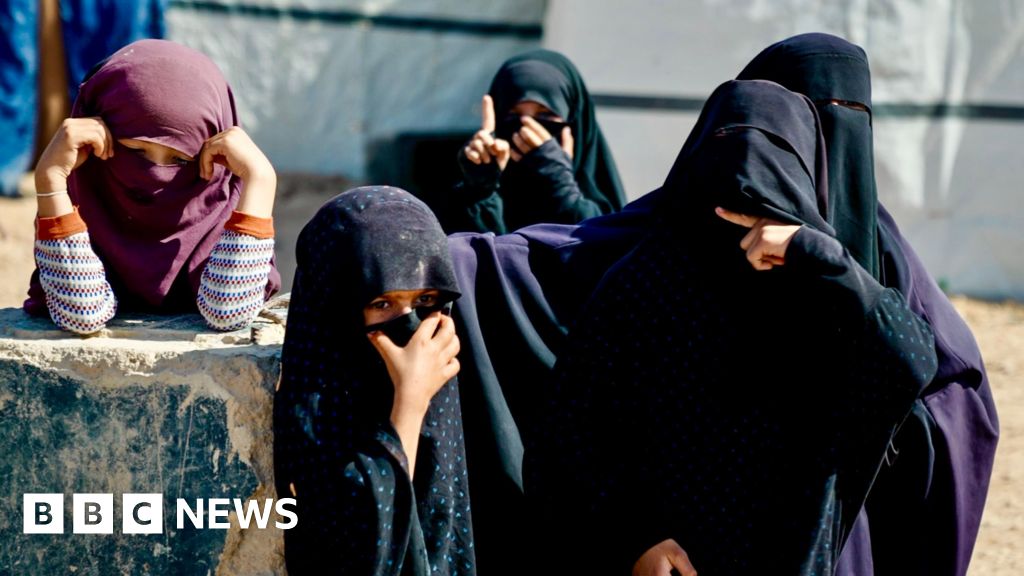
Amidst this chaos, the families of IS members are held in detention camps, facing poor living conditions and health issues. Some individuals, like Mehak Aslam, a mother detained in one such camp, recount the harsh realities of life while asserting they were unaware of the full scope of IS’s actions when they entered the region.
As the situation evolves, concerns grow regarding children raised in these camps, who may carry forward the extremist ideologies of their parents. The Kurdish camp administrator noted anxiety over the potential for a new generation of militants forming in these environments.
Source: https://www.bbc.com/news/articles/cze6y5x8np8o?at_medium=RSS&at_campaign=rss