
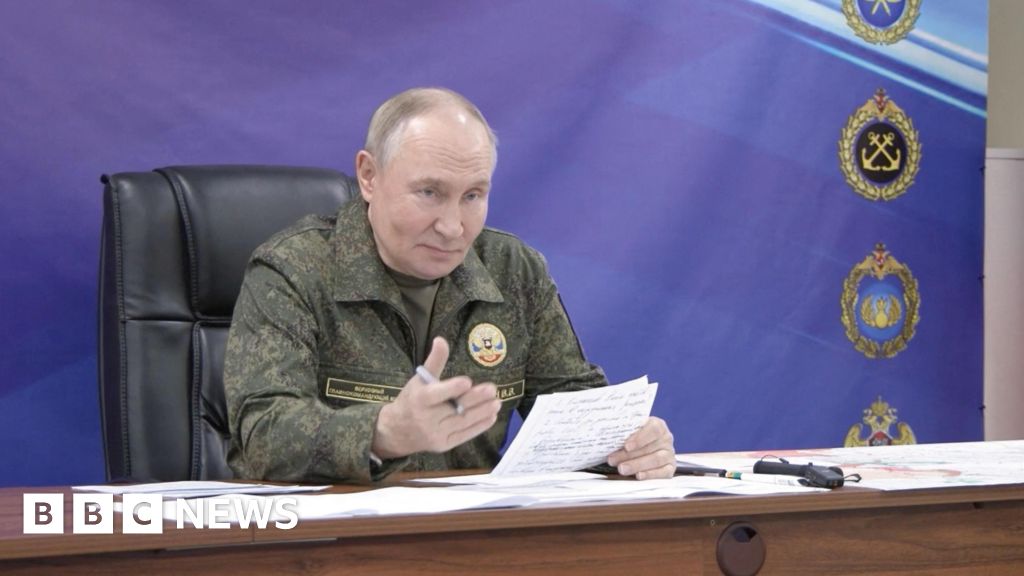
Russia has conducted tests of its nuclear-powered Burevestnik cruise missile, according to Chief of General Staff Valery Gerasimov. In a meeting with President Vladimir Putin, Gerasimov reported that the missile successfully completed a flight lasting 15 hours, covering a distance of 14,000 kilometers (8,700 miles). He indicated that this distance is not the missile’s maximum range.
The Burevestnik, first announced in 2018, is intended to possess an unlimited range and the capability to evade missile defense systems. While Putin stated that a “final successful test” occurred in 2023, independent verification of this claim is lacking. An arms control group reported that, out of at least 13 known tests since 2016, only two have achieved partial success.
During the recent test, the missile’s aerial maneuvering capabilities were evaluated and deemed satisfactory, as stated by Gerasimov. Reported by news agency Tass, he noted the missile could effectively bypass existing defense systems.
The strategic value and effectiveness of the Burevestnik have sparked debate among military experts. A 2021 report from the US Air Force’s National Air and Space Intelligence Center highlighted the missile’s potential as a unique weapon with intercontinental range. However, analysts from the International Institute for Strategic Studies (IISS) have noted significant challenges in making the weapon operational, including ensuring the reliable performance of its nuclear propulsion system. Previous flight tests have reportedly encountered failures, and there have been incidents leading to fatalities.
The missile, referred to as Skyfall by NATO, is believed to be powered by a nuclear reactor that activates following the launch phase. Satellite imagery from August 2024 has identified a location approximately 475 kilometers (295 miles) north of Moscow as a likely launch site, where nine horizontal launch pads are reportedly under construction.
Source: https://www.bbc.com/news/articles/c0qp8ed877jo?at_medium=RSS&at_campaign=rss