
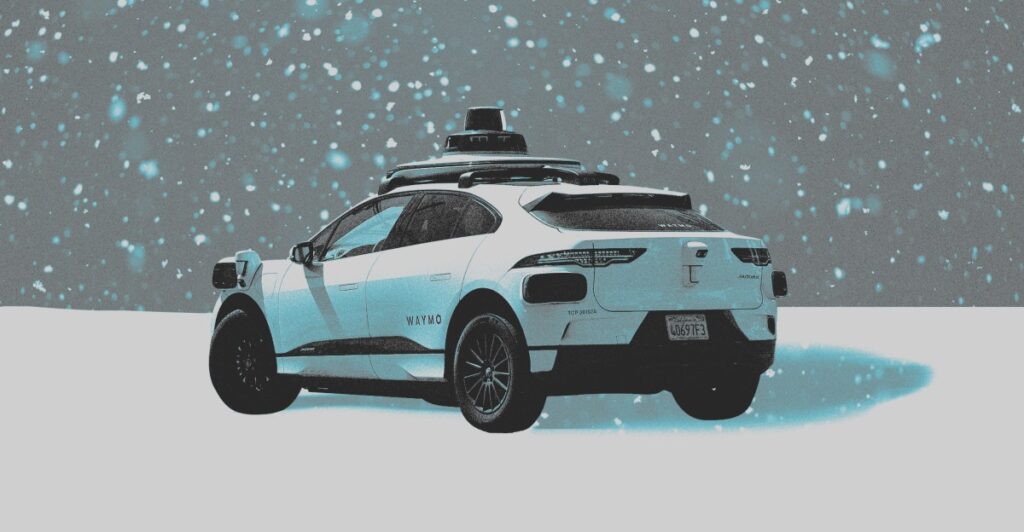
During a recent all-hands meeting, Waymo’s chief winter weather expert emphasized the need for the company’s robotaxis to navigate snowy conditions as part of its expansion to new cities. Historically, Waymo has focused on warmer areas like Phoenix and Los Angeles, but plans to enter East Coast markets such as Boston, New York City, and Washington, D.C., necessitate improvements in handling adverse weather.
Robert Chen, Waymo’s product lead for weather, highlighted the significance of this winter for the company’s progress in validating its driver’s capabilities in snow. The challenge remains: if Waymo’s vehicles cannot manage winter roads effectively, this may restrict their growth compared to human-driven ride-hailing services, which operate in all weather.
Chen articulated Waymo’s goal of providing a reliable service year-round, not limited to favorable conditions. Autonomous vehicles operate optimally under clear, dry conditions, and snow poses unique challenges, as it obscures road markings and signs. Phil Koopman, a Carnegie Mellon University expert, noted that human drivers can interpret partially visible traffic signs, a skill that may require distinct training for machines.
Waymo’s technology employs a variety of sensors, such as lidar and radar, which may be better suited for snowy conditions than camera-only systems like those of Tesla. However, the scarcity of snowy conditions in Waymo’s data has prompted innovative data augmentation methods.
To address the challenges of winter driving, Waymo is testing vehicles in regions with snowy weather and enhancing their sensor technology. A sixth-generation system is currently being developed for severe winter conditions, while data collection continues during various weather scenarios. Future operations in Washington, D.C. are anticipated, along with potential launches in London and Japan, with the timeline remaining uncertain.
Source: https://www.theverge.com/transportation/805471/waymo-robotaxi-winter-snow-weather-testing