
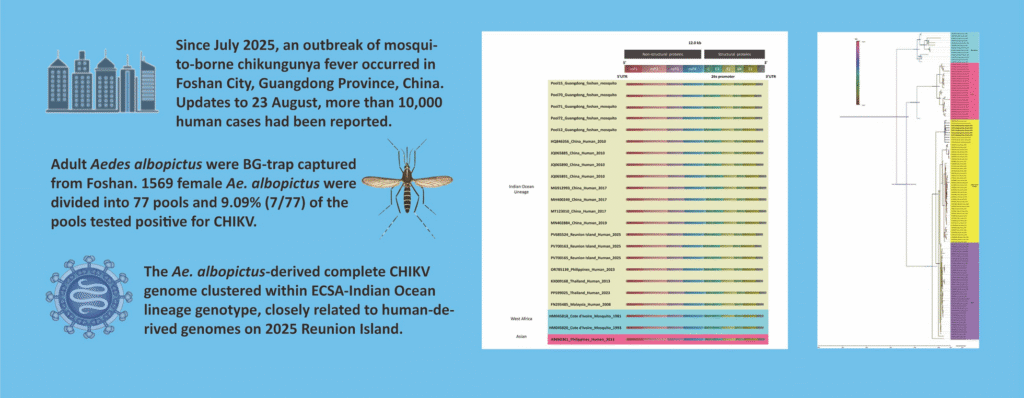
Researchers have highlighted the growing prevalence of Chikungunya virus, a mosquito-borne illness that has emerged as a significant public health concern in tropical and subtropical regions. The virus, primarily transmitted by the Aedes aegypti and Aedes albopictus mosquitoes, has been documented in substantial outbreaks across Africa, Asia, the Americas, and more recently, Europe. Studies indicate fluctuations in transmission dynamics, influenced by environmental factors, urbanization, and population mobility.
A wide-ranging review incorporating recent findings suggests that the virus continues to adapt and evolve, raising concerns over its epidemic potential. The clinical manifestations of Chikungunya can include severe joint pain and other symptoms that may lead to long-term health impacts. Public health experts stress the importance of vector control and surveillance strategies to manage and mitigate outbreaks.
Recent data from 2023 detail a significant rise in cases reported globally, emphasizing an urgent need for improved public health responses.
- Why it matters:
- The findings underscore the necessity of enhanced vector control measures to manage mosquito populations and prevent Chikungunya outbreaks.
- Awareness and preparedness can support communities and healthcare systems in addressing potential health crises associated with Chikungunya virus transmissions.
- The latest:
- New data reported in 2023 indicates a significant increase in Chikungunya cases worldwide.
Source: https://idpjournal.biomedcentral.com/articles/10.1186/s40249-025-01383-9
Source: https://idpjournal.biomedcentral.com/articles/10.1186/s40249-025-01383-9