
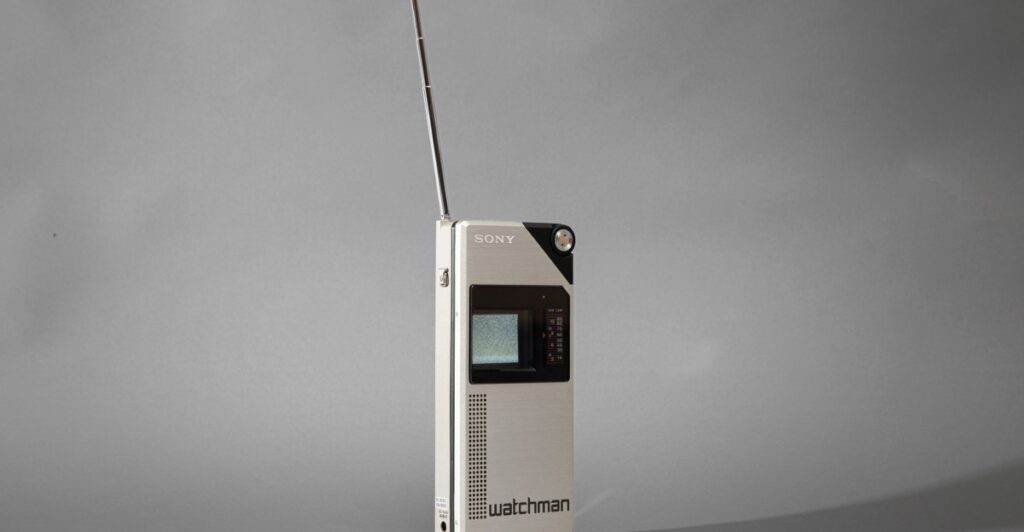
The Sony Watchman, first introduced in 1982, represents a significant shift in how portable media was consumed. At that time, television was typically associated with large, bulky furniture pieces. Sony aimed to change this perception with the Watchman, a personal device designed for on-the-go viewing.
For the latest episode of the podcast Version History, the hosts David Pierce, Allison Johnson, and Victoria Song explore the history of this innovative device. They begin by referencing the Sony Walkman, which revolutionized personal music consumption and reinforced Sony’s status as a major player in the gadget market.
While the Watchman was not the inaugural portable TV, as companies like Casio and Sinclair had already produced similar devices, it featured notable enhancements. A key advancement was the Flat Display Picture Tube, which minimized traditional CRT technology into a more compact design. Although it still required some space, the Watchman could be discreetly used in various settings, and with the expansion of broadcast television at the time, users had access to a wide array of programming.
The Watchman enjoyed nearly two decades in the market but ultimately fell out of favor as technology evolved. The rise of smartphones significantly diminished the demand for portable TVs. Nonetheless, during its peak, the Watchman had a considerable impact and brought forth discussions about social interactions and the implications of screen proliferation, issues that remain relevant today.
This episode marks the third installment of Version History, with previous topics including hoverboards and BlackBerry Messenger. The hosts encourage feedback from listeners to refine the podcast’s focus for future episodes, while providing additional resources for those interested in learning more about the Watchman.
Source: https://www.theverge.com/podcast/802307/sony-watchman-tv-version-history