
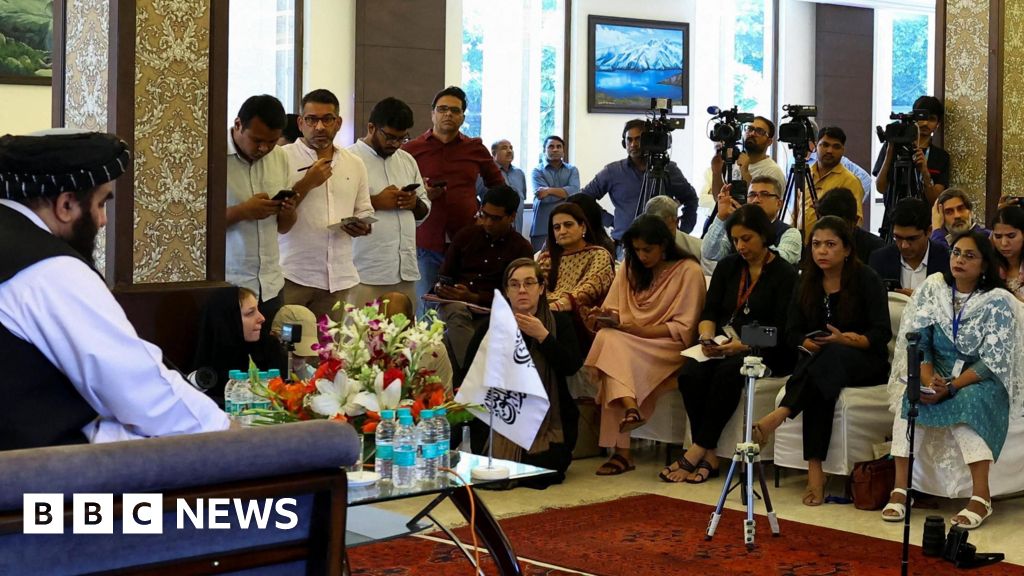
A recent press conference in New Delhi by Afghan Taliban Foreign Minister Amir Khan Muttaqi attracted significant attention, particularly due to the involvement of female journalists. This event followed considerable outrage regarding the exclusion of women from a previous press meeting, prompting its organization just two days later. During the conference, Muttaqi stated that the exclusion was unintentional and attributed it to logistical issues, claiming that participation was limited due to a short notice.
The United Nations has labeled the situation regarding women’s rights in Afghanistan as “gender apartheid,” highlighting severe restrictions such as barring women and girls from secondary education, parks, and various jobs. Despite the Taliban’s assurances that they respect women’s rights aligned with their interpretation of Afghan culture and Islamic law, international observers have noted that their efforts to gain global recognition are undermined by these restrictions.
Muttaqi’s visit to India included high-level discussions, with Indian officials stating they do not formally recognize the Taliban government but maintain some diplomatic relations. The press conference saw around 16 male reporters in attendance, while female journalists reported being turned away. The Ministry of External Affairs in India indicated that it was not involved in organizing the press event.
The exclusion of women at the gathering sparked criticism from various quarters, including political leaders and journalistic organizations. Statements from the Editors Guild of India and other groups condemned the discrimination, emphasizing the necessity of safeguarding women’s rights and encouraging solidarity among journalists.
In response to public outcry, a subsequent event was organized, marketed as “inclusive.” During this later conference, many journalists challenged Muttaqi on women’s rights and educational restrictions. He claimed that while limitations exist, the education of women and girls has not been outlawed, a claim met with skepticism by attendees who pointed out ongoing restrictions.
This incident raises questions about the broader implications of diplomatic relations and the international community’s approach to women’s rights under Taliban rule.
Source: https://www.bbc.com/news/articles/c4gze7ely6vo?at_medium=RSS&at_campaign=rss