
Field Ae. albopictus Collection
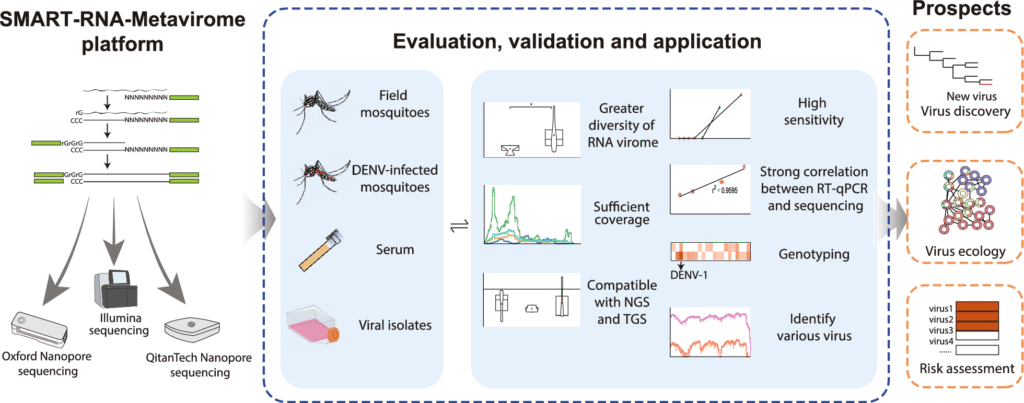
In September 2022, collections of the wild populations of Aedes albopictus were conducted using handheld portable collectors in Guangzhou (GZ) and Zhongshan (ZS) in Guangdong Province, China. The collected mosquitoes were preserved in ice-filled vacuum bottles and transported to a laboratory. After freezing at −20°C for 15 minutes, species identification was performed using a taxonomic key. Following identification, specimens were subjected to DNA sequencing of the cytochrome coxidase subunit I mitochondrial gene (coxI) for genetic analysis. Mosquitoes were pooled into groups of ten based on species and geographic location.
Mosquito and Dengue Virus Strains
The Foshan strain of Aedes albopictus has been maintained in culture since 1981 at the Guangdong Province Center for Disease Control and Prevention. The mosquitoes were kept under controlled conditions (28 ± 1°C, 70-80% relative humidity, 16/8 h light/dark cycle). The DENV-1 strain N46V (GenBank Accession No. KX458014.1) was isolated from serum samples during dengue outbreaks in 2014 in Guangdong Province.
Dengue Virus Infection
The DENV-1 strain N46V was propagated in C6/36 cells and mixed with sheep blood for mosquito feeding. After a starvation phase, female mosquitoes were fed on the blood mixture for 45 minutes and subsequently housed under controlled conditions for analysis.
RNA Extraction and Sequencing
Total RNA was extracted from mosquito samples and evaluated for quantity and quality. Sequencing libraries were prepared following the SMART-RNA-Metavirome protocol and sequenced using Illumina technology. Analytical methods for data processing and quality assurance were employed to ensure accurate results.
- Why it matters: This research provides critical insights into the ecological behaviors of Aedes albopictus and its role in dengue virus transmission, informing public health strategies.
- The latest: Administrative guidelines on mosquito surveillance and control have been updated based on emerging genetic data.
Source: https://idpjournal.biomedcentral.com/articles/10.1186/s40249-025-01371-z
Source: https://idpjournal.biomedcentral.com/articles/10.1186/s40249-025-01371-z